MITHI: Eminent writers, poets and men of letters arrived from different parts of the country at the foothills of Karoonjhar in Nagarparkar town the other day to launch Seraiki poet and writer Riffat Abbas’ famous novel Namak ka jeewan ghar.
Human rights activist and writer Amar Sindhu said the novel had been beautifully written about a land where there was no religion, inhabitants had no idea of any supreme metaphysical authority and in the absence of belief in such an authority, they hadn’t built a political system that entrusted all powers to a single authoritarian figure.
“As there is no king, there is no accumulation of wealth, nor palaces, huge castles, of course, there are no armies hence no conflicts, no wars within and without. As there are no wars and no bloodshed, there are no violent deaths,” she remarked.
“What people with ordinary level of thinking and logic fail to imagine, the genre of fiction easily does,” she said.
She lauded Abbas’ work and said that such novels or fictions were the need of the hour and urged participants to read such literature.
“Abbas employs the word namak (salt) instead of commonly used matti (clay) to signify indigeneity, clearly no overt or covert effort has been made to belittle or diminish the significance of earthly traits of the culture portrayed in the novel,” she said.
Ali Dost Aijiz, well-known Sindhi poet, said: “A good novel like this unlocks doors to new worlds and realms of our existence that we keep disregarding under pressure of our society and daily, busy routines”.
Khalil Kumbhar, poet and chief organiser of the book launch event, said: “At first glance the concept of a city without religion, war and death appears to be a work of a Utopian mind. But as we go through the novel, we come to realise that Abbas seeks to reclaim indigenous cultural soul ravaged by foreign invaders, left floundering under the colonisers’ oppressive narratives.
“Though the thrust of his Seraiki poetry is charged with retrieval of the indigeneity, he has found the genre of novel more powerful in this regard and resonance of a similar theme can be traced in his poetry as well,” said Ishaq Samejo, poet and writer.
Khalid Kumbhar said that Riffat had been at the forefront when the very existence of Karoonjhar hills was put in danger due to granite extraction a few months back.
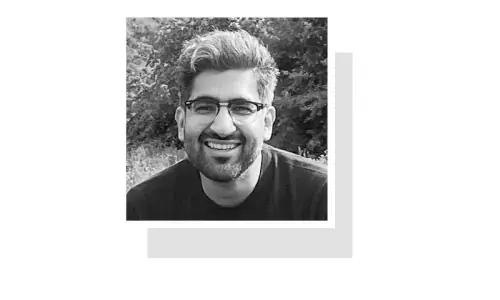
Riffat Abbas, the author, said that it was a matter of great pride for him that his literary labour was being praised at the foothills of Karoonjhar that had always attracted him and remained an important factor behind his poetic and prose work.
Shabir Soomro, Mir Hassan Arisar, Khalil Khoso, Piyaro Shivani, Partab Shivani, Allah Rakhio Khoso, Changez and others also spoke at the ceremony.
Published in Dawn, March 21st, 2022