Punjab fears wheat smuggling as ECC declines support price hike

LAHORE: A wheat and flour crisis is feared in the months to come as the Economic Coordination Committee (ECC) of the cabinet has rejected Punjab’s proposal for increasing the minimum support price (MSP) of grain to check its smuggling.
Market watchers as well as government officials believe that the huge difference between the local and international wheat prices will lead to smuggling out of it.
Pakistan had imported grain at a rate of around Rs2,700 per 40kg (including freight charges) last year, whereas the local official rate was Rs1,800 for the same quantity. Wheat prices in the world markets are on the rise because of the Russia-Ukraine war and have gone up 11 per cent in a week.
Punjab has been allowed to increase the MSP to Rs1,950, though the provincial authorities had sought that it should be enhanced to at least Rs2,200 per 40kg to match the price being offered by Sindh. But the ECC didn’t approve the request in its meeting held in Islamabad the other day.
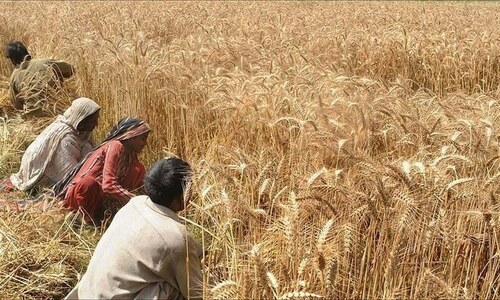
Naeem Hotiana, a progressive grower from central Punjab, sees a severe wheat crisis when the crop will be harvested in April. He says that farmers like him will tend to hoard the grain instead of selling it to the government at ‘throwaway’ prices.
He fears wheat smuggling to Sindh and Afghanistan at a large scale as the growers will try to recover their cost of production.
Mr Hotiana forecasts an even more serious wheat crisis in the coming years because of the crop’s high cost of production and poor yield as compared with other crops.
“On an average 27 maund per acre yield, a farmer will get less than Rs55,000 at the official rate of Rs1,950 per maund (40kg) which means a profit of Rs30,000. Whereas by sowing maize, he may earn Rs70,000 per acre profit during the same period.”
Ali Nawaz Wattoo, another progressive farmer, fears that per acre yield is set to decline this year due to lesser use of DAP (di-ammonium phosphate) and urea because of shortage and exorbitantly higher rates.
“I’ve used half a bag of DAP against around two bags per acre last year. Likewise, the use of urea compost has also been poor this time. That means a drop of 20 maunds per acre yield,” he estimates.
“This is a financial loss of the farming community as well as the country, which will have to import wheat at higher rates from abroad to meet the local shortfall.”
Referring to the declining trend in wheat sowing, he asks the government to at least do something to cut down grain production costs if it is not ready to increase its minimum support price in the interest of urban consumers.
Otherwise, he warns, at least small farmers have decided to sow wheat only for their consumption and this will be a horrible scene for the government as its food import bill will shoot up while it is already short of foreign exchange reserves.
Published in Dawn, February 26th, 2022