0
0

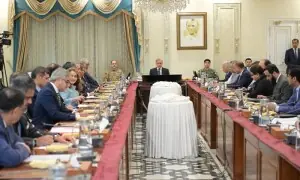
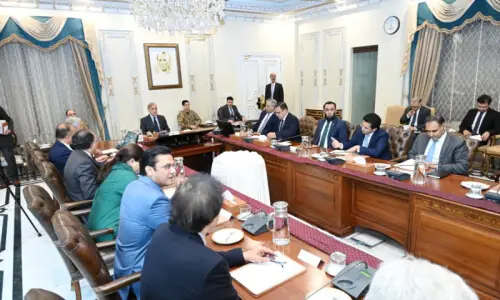
HYDERABAD: Eminent linguists, literati and other scholars speaking at a conference have said that a strategy was required at individual and institutions levels to face the challenges confronting mother tongues in this era of modern technology. They stressed that primary education should be imparted in mother tongue.
The conference on “Growth and development of mother tongues in era of technology” was organised by the Sindhi Language Authority (SLA) to mark International Day of Mother Tongues on Monday.
Noted intellectual Dr Nawaz Ali Shauq observed that people usually did not speak in their mother tongue. “The culture of autaq [guest room sessions], which used to be an important institution of language, folk literature and culture, has now come to an end for which we should hold ourselves accountable,” he said, pointing out that people used to share humour, riddles etc used in their mother tongue in autaq sessions.
Dr Shaug said that people should not forget their own language while speaking other languages. The culture of autaq needed to be revived, he stressed.
Conference to mark International Day of Mother Tongues calls for strategy to face new challenges
He said teachers’ appointment should be made strictly on merit for imparting better primary education. As long as primary education remained weak, development of language would remain impossible, he said.
SLA chairman Dr Mohammad Ali Manjhi said that “Sindhi is the oldest language of the world; it had been taught and written for thousands of years”. Various scripts of this language are found in different periods and the present one was formulated and given a final shape during the British era. But this script is also found in the Kalhoro and Arghun era. Many private schools are owned by Sindhi people, still they take imparting education in Sindhi as a stigma.
Dr Manjhi said SLA had focused on Sindhi computing and Internet to keep pace with the era of modern technology, adding that many books were available online besides the Sindhiana encyclopedia [MH1] and dictionaries were also available so that Sindhi language could be read all over the world easily.
He pointed out that signboards in Sindhi were seen along roads, highways, provincial borders and also at numerous places in cities. The Indus Script Museum had already been set up at the SLA and an Indus script laboratory would also be established, he added.
Noted writer Dr Qazi Khadim said that Sindh had a treasure of knowledge in Sindhi language that could be translated in other languages; this would be a great achievement. Eminent short story writer and columnist Amar Jaleel observed that “mother is the first institution of knowledge where a child learns his/her language”.
Prof Idris Jatoi said that learning technology for understanding multiple languages had now become essential. He said Unesco was going to observe “Decade of languages and cultures” (2022-2032) and Sindhi should capitalise on this opportunity.
Majid Bhurgari Institute of Language Engineering director Fayyaz Buriro said that technology had become ‘book of future’ and denying this reality would not go down well with people. He said Sindhi language was lagging behind in terms of technology while Hindi was witnessing growth. He said Google had included Sindhi in 2019 but more work should be done on it.
Dr Fayyaz Latif, Nawab Kaka, Dr Nazir Shakir Brohi, Bella Raza Jamil, Shabnam Gul, Dr Mazhar Ali, Dr Ahsan Danish, Fatima Hassan and others also spoke.
Published in Dawn, February 22nd, 2022