Draft of Iran’s nuclear deal revealed


VIENNA: A US-Iranian deal taking shape to revive Iran’s 2015 nuclear agreement with world powers lays out phases of mutual steps to bring both sides back into full compliance, and the first does not include waivers on oil sanctions, diplomats say.
Envoys from Iran, Russia, China, Britain, France, Germany, the European Union and United States are still negotiating details of the draft accord amid Western warnings that time is running out before the original deal becomes obsolete. Delegates say much of the text is settled but some thorny issues remain.
The broad objective is to return to the original bargain of lifting sanctions against Iran, including ones that have slashed its crucial oil sales, in exchange for restrictions on its nuclear activities that extend the time it would need to produce enough enriched uranium for an atomic bomb if it chose to.
Iran has breached many of those restrictions and pushed well beyond them in response to the US withdrawal from the deal in 2018 and its re-imposition of sanctions under then-US President Donald Trump. While the 2015 deal capped uranium enrichment at 3.67 per cent fissile purity, Iran is now enriching to up to 60pc, close to weapons grade.
Iran insists its aims are wholly peaceful and that it wants to master nuclear technology for civil uses. But Western powers say no other state has enriched to such a high level without developing nuclear weapons and Iran’s advances since the US walkout mean the 2015 deal will soon be totally hollowed out.
The draft text of the agreement, which is more than 20 pages long, stipulates a sequence of steps to be implemented once it has been approved by the remaining parties to the deal, starting with a phase including Iran suspending enrichment above 5pc purity, three diplomats familiar with negotiations said.
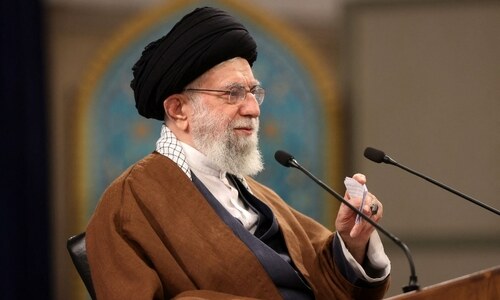
Iran’s supreme leader, meanwhile, vowed on Thursday that his country would ramp up development of its civilian nuclear programme.
In a televised speech, Ayatollah Ali Khamenei urged the importance of nuclear energy for Iran, while again asserting that it had no interest in nuclear weapons.
Khamenei’s remarks seemed clearly aimed at the countries involved in the Vienna talks.
“Enemies are making cruel moves against our nuclear energy issue, (putting) sanctions on nuclear energy that they know is peaceful,” he said. “They do not want Iran to achieve this great and significant progress.”
Published in Dawn, February 18th, 2022