ISLAMABAD: Efforts are underway for implementation of a project that has been planned to strengthen national capacity for chemical and hazardous waste management. Both the environment and people’s health must be protected from the impact of hazardous waste through creation of a proper channel to get rid of it.
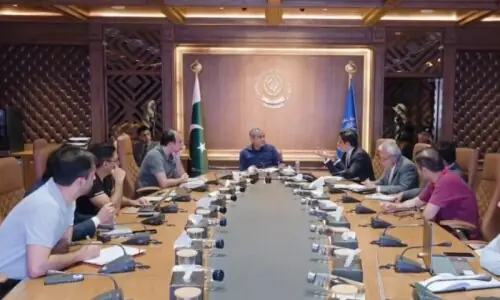
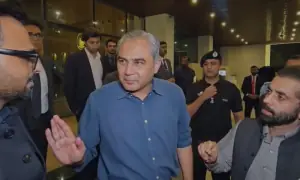
Minister of State for Climate Change Zartaj Gul said this on Thursday while speaking at a workshop focused on strengthening national legislation around chemical and waste management.
The event aimed to sensitise relevant stakeholders from national and international government and non-governmental organisations and people from the industrial and educational sectors on importance of the waste management.
She noted that mismanagement of hazardous waste materials over the years in the country and their collection, treatment, and disposal had been causing significant harm to human health and the environment.
“We have now launched efforts for implementation of an overarching project for strengthening national capacity for chemical and hazardous waste management in a way that meets global guidelines,” Ms Wazir said, adding hazardous waste could take the form of solids, liquids or gases and were generated primarily by chemical production, manufacturing, and other industrial activities.
“However, we understand that improper hazardous-waste storage or disposal frequently contaminates surface water and groundwater supplies as harmful water pollution and can also be a source of dangerous land pollution,” she said.
Settlements around old and abandoned waste disposal sites may be in a particularly vulnerable position, she added.
Climate Secretary retired Capt Sikander Qayyum told participants that his office in collaboration with United Nations Environment was implementing the project that aimed to effectively implement international conventions including Basel, Rotterdam, Stockholm and the Minamata for management of environmentally harmful chemicals and hazardous materials in a scientific way.
He highlighted that the Minamata Convention on Mercury was a global treaty to protect human health and the environment from the adverse effects of mercury. The Basel Convention controlled the transboundary movement of hazardous waste and their disposal. Similarly, the Stockholm Convention reduced and eliminated persistent organic pollutants.
“One of the main issues raised by the European Union with Pakistan was the formulation of a policy and regulations on hazardous waste management.
“In this regard, as a responsible party to the Basel Convention, Pakistan will formulate the required policy for hazardous waste management by March 2022,” he said.
Syed Mujtaba Hussain, senior joint secretary at the climate ministry said, “Chemicals and hazardous waste materials are mostly non-degradable, persistent in nature, can be biologically magnified, are highly toxic and even harmful at very low concentrations.”
Published in Dawn, January 7th, 2022