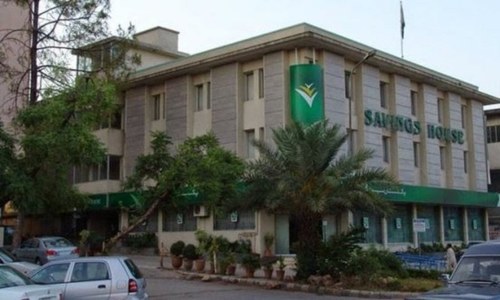
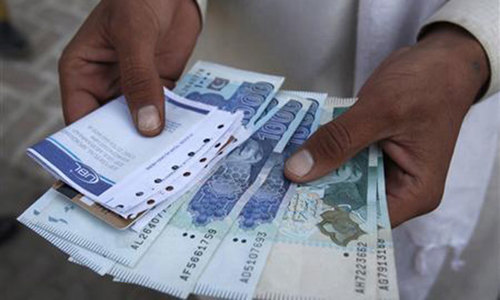
KARACHI: The outflows from the National Savings Schemes (NSS) continued during the first four months of 2021-22 mainly due to a ban on institutions to invest in these schemes.
As a result, the government’s options to get higher amount of liquidity have reduced, particularly when it cannot borrow money from the State Bank of Pakistan (SBP) under an IMF agreement.
The SBP data on Monday showed that on a net basis the NSS recorded an outflow of Rs78.88 billion during the July-October period against an inflow of Rs24.84bn in the same period last year. Subsequently, the NSS witnessed an outflow of Rs317.3bn in 2020-21 against a net investment of Rs370.9bn a year ago.
Savers pulled out Rs6.8bn in October, Rs21bn in September, Rs24.8bn in August and the highest Rs26bn in July.
The inflows started declining after the federal government on the recommendation of the SBP discontinued institutional investments in the NSS from July 1, 2020. Following the offer of exceptionally high (and above market returns), the NSS attracted significant investment before the ban on institutional investments.
A report of the SBP said that the higher rates of return led to a number of problems, such as a sharp rise in the government cost of financing its deficit as the instruments were available ‘on tap’, the flows were not predictable and made the government funding cost volatile. The inherent volatility in these flows and consequent uncertainty over the government funding requirement from the banking system added difficulty in formulating stable monetary policies.
The report said the administered nature of NSS profit rates was a major source of distortion in the term structure of interest rates; as these instruments were not traded (ie price discovery was not possible), these did not form benchmarks for corporate debt; and finally the implicit put option (the bonds could be substituted at any time) meant that corporate issues would have to be priced at much higher yields to compete with NSS instruments.
“In effect, this ensured that the domestic debt market would remain moribund,” said the SBP. The same situation emerged in 1990s and the then government initiated NSS reforms and barred all types of institutional investments in NSS in March 2000.
“Indeed even the limited reforms of the late 1990s and early 2000 have not been sustained. Instead, the government chose to increase the non-bank borrowing by removing the restriction on institutional investment in NSS,” said the SBP report.
Published in Dawn, December 7th, 2021