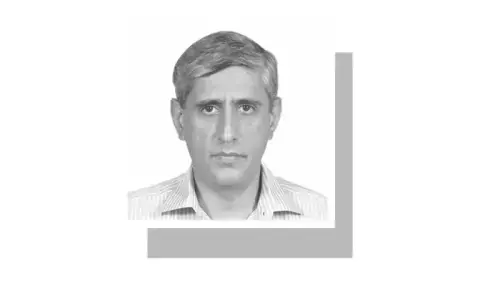
LAHORE: Senior economist Hafeez Pasha, moderator of the session on ‘Inequality in wealth and income Pakistan’ at the Asma Jahangir Conference, 2021, opened the talk citing Article 38 of the Constitution. And it was an apt tribute to rights activist Asma Jahangir as well.
The article is about the well-being of the people and about ensuring equitable adjustment of rights between employers and employees, and landlords and tenants.
In the ensuing discussion, Dr Kardar came up with glaring data on the wealth divide and the rising gap, often attracting ‘ohs’ and ‘aahs’ from the crowd, most of which consisted of lawyers, students and NGO people.
“This was the vision of the lawmakers back in the 1970s, which sadly has now been forgotten,” he said, citing data the richest one percent of the population holds over nine percent of the income share, while the poorest one percent of the population holds only 0.15 percent of national income.
According to the agriculture census of 2010, one percent of farmers (read: feudal lords) own 22 percent of the agricultural land. The same formidable one percent occupies 16 percent of residential property, while two million families with eight or more people live in a one-room house.
Panelist Dr Kaiser Bengali appeared more of a social activist than a technocrat while describing wealth and income inequalities. He called the top elites of Pakistan on the wrong side of the fence, said the class was mainly responsible for creating two Pakistan.
One side looks like California, and the other a ‘Pakistan, he said, adding that “the divide is deliberate, and mainly made by the top elite,” he said.
He blamed the authoritarian regimes in Pakistan for poor income and growth indicators and left the audience in disbelief that the golden eras of Pakistan in terms of economic growth and development were the 1970s (of the Bhutto) and later on the 1990s (of Benazir Bhutto and Nawaz Sharif).
At the end of the day, he said, it was the class divide, and not the civilian-military divide, that instigated the economic divide.
“And the cure lies, not in constitutional reforms, but in baghawat (revolt),” he said, invoking a standing ovation.
Dr Shahid Kardar said that, in fact, no country or monetary institution wanted to help run a country of 125 million people. The IMF reforms would only burden the poor with Rs400bn indirect taxation.
MACRO INDICATORS: The session titled ‘Macroeconomic indicators’, moderated by Khurram Hussain and Dr Kaiser Bengali, Dr Aisah Ghous Pasha, Ali Hasnain and Nadeemul Haq sat to resolve the complex economic language, dominated by heavy jargons.
Khurram wanted to know if there were two functional economies working in the country, one run by the government and the other by the public.
Dr Bengali said growth rate figures were often misleading. He said the real indicators were jobs, exports, and people’s purchasing power.
Dr Pasha said narratives on economic security and national security were interlinked. Unfortunately, she said, we have politicized the economy only for political scoring.
Mr Hasanain said macro indicators don’t reflect the real society. He said there was always talk on expenditures on health, and education, so on but the efficiency of the expenditures was hardly examined. He talked about regulating property rights and ensuring the rule of law.
Mr Haque said data and numbers were only for the consumption of donors to grab headlines, whereas the real issue was to create opportunities, instead of talking about the welfare economy.
The session ended on a sour note after the panelists differed on the core direction of the economy.
Published in Dawn, November 22nd, 2021