0
0

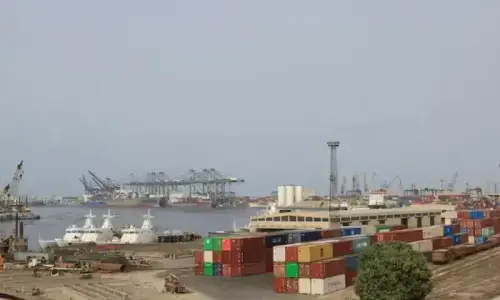
KARACHI: Speakers participating in a webinar held on Saturday emphasised the need for collaboration among various port agencies to help tackle growing marine pollution that threatens the already depleting fish stocks and livelihood of fishing communities.
Titled ‘Marine pollution management: issues and remedies’, the programme was organised by the Karachi Port Trust (KPT).
Highlighting Pakistan’s potential as a maritime nation, speakers said it had a 1,100 kilometres long coastline and possessed diverse marine resources. Some sectors of the country’s blue economy had immense potential that needed to be explored to strengthen food and energy security.
Prime Minister Imran Khan, they said, had declared the year 2020 as the “Year of Blue Economy” and steps were needed to help the country move towards developing a sustainable shipping industry. Pakistan would also contest the elections for Category C of the International Maritime Organisation this year, they said.
On marine pollution, chairman KPT Nadir Mumtaz Warriach, also the chief guest, said it’s vital to prevent marine pollution in order to explore our potential as a maritime nation and protect the livelihood of Pakistani coastal communities.
“Encroachment along harbour and coastal areas also contribute to coastal degradation. All forms of marine pollution are detrimental to juvenile fish while pollution-free beaches promote aquatic sports, national and marine tourism.”
Toxicity in the harbour’s waters, he pointed out, was damaging for both vessels and port infrastructure.
All maritime stakeholders should work together to upgrade the Karachi port as a green port of the region complemented by renewable energy sources.
Summing up the recommendations presented during the programme, the chairman of KPT said research in the maritime sector was the need of the hour, including digitalisation, to further revitalise Karachi’s and the national economy.
Universities in coastal cities such as Karachi and Gwadar should have faculties for maritime studies, he said.
“Capacity-building of human resources will increase employment generation in the maritime sector, including fishing, ship building, boat construction, port and container logistics as well as in expanding port infrastructure. This will also help promote ease of doing business in accordance with government policy,” he said.
The KPT chairman called for a holistic integrated approach and enhanced access to the marine areas.
In this connection, he said, KPT chair had been established in Bahria University a few years ago with the aim of developing linkage between academia and operational activities at the sea port.
Published in Dawn, September 20th, 2021