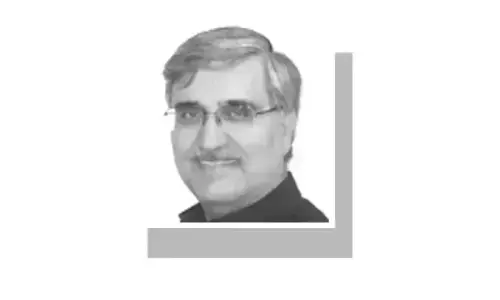
LAHORE: Radicalisation has more to do with social inequality than ideology, says Dr Tahir Abbas from the Leiden University, the Netherlands.
He explained how polarisation and social exclusion were at the root of radicalisation around the world.
‘Ideology is certainly a pull factor but the push factors are inequalities, and once they are addressed, radicalisation will come down,’ he explained while speaking at Afkar-i-Taza ThinkFest Conversations online with analyst Azeema Cheema.
Giving an example, Dr Abbas noted that a magazine of the so-called Islamic State was published in 26 languages and most of the topics covered in it were about how Muslim youth in the West felt disempowered—the central issue.
Dr Abbas explained that despite mounting evidence of factors other than ideology being more important, the state and the political elite were in denial.
“In fact, even the media, especially the West, wants to keep framing the issue as an ideological one for its own benefit. Capitalism needs an ‘other’ and so it is easy to frame it in ideological term,” Dr Abbas emphasized. He then gave the example of the Quilliam Institute, the UK, which was set up by ‘ex-radicals’ but had now floundered, since by simply creating ‘performers’ supposed to have been, ‘cured’, the state could not absolve itself of its responsibility of combating exclusion. “The Quilliam Institute was a wedge between the UK government and the people and it failed to address the real issues,” noted Abbas.
Asked by Azeema Cheema about what policy mechanisms needed to be built for inclusion, Dr Abbas said first “there cannot be a predetermined outcome of interventions. Secondly, we need to build societies from the bottom up and address issues of racism, equal opportunity and access. Thirdly, we need to treat people like human beings”.
Published in Dawn, September 14th, 2021