The Olympic blame-game continues


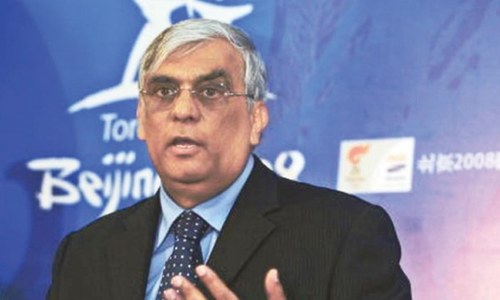
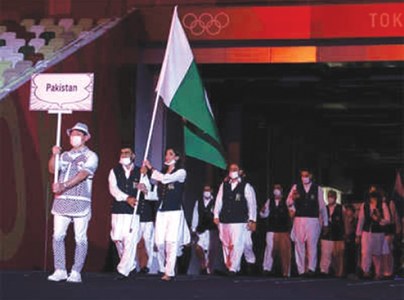
THE government calling for the resignation of Pakistan’s Olympic chief retired Lt Gen Arif Hasan is a continuation of the blame-game that has ensued since the Tokyo Games began, an attempt to not be held responsible for another poor performance at the world’s biggest sporting extravaganza.
The demand came after Prime Minister Imran Khan held a meeting to discuss the Olympics’ performance with Minister for Inter-provincial Coordination Dr Fehmida Mirza, Pakistan Sports Board director-general retired Col Asif Zaman, Athletics Federation of Pakistan president retired Maj Gen Akram Sahi, Pakistan Hockey Federation secretary general Asif Bajwa and former Pakistan Football Federation general secretary Mujahidullah Tareen.
Only the AFP president represented a discipline in which Pakistan took part at the Tokyo Games. There was no one from the weightlifting, shooting, badminton, judo or swimming federations. There wasn’t even any representation from the Pakistan Olympic Association, to clarify its position.
The government’s move is certain to draw the wrath of the International Olympic Committee, which doesn’t allow for political or government interference in the matters of its National Olympic Committees. It was only in 2014, when Pakistan escaped an IOC suspension following the government’s decision to recognise the POA led by Arif.
A General Council comprising 106 members elects the POA president. The only way to force the president’s ouster is to have a successful no-confidence motion passed by the council. At this point in time, that seems very unlikely and a government-forced ouster would lead to a similar situation that has seen global football body FIFA suspend Pakistan, following the takeover of the PFF headquarters from the FIFA-appointed Normalisation Committee by a body that was elected by the Supreme Court.
Going through the constitutions of the PSB and POA, it is clear that it is the former’s job to give training facilities to athletes whilst providing them with the right infrastructure. It is then the responsibility of the national federations to prepare athletes for international events. The POA claims it has a limited role, even though Article-V, point 12 in its constitution defines its role as to “arrange and encourage systematic training of sportsmen, coaches and sports administrators in Pakistan and assist them for training abroad”. It contends that it secured IOC scholarships for three shooters, badminton player Mahoor Shahzad and weightlifted Talha Talib in the lead-up to the Games. Talha, who narrowly missed out on a medal when he finished fifth, got a total of $21000 in 28 months through the $750-monthly stipend.
The lack of sponsorships for sporting bodies apart from cricket means federations have little or no funding in training athletes. They claim there is no comprehensive system to get annual grants from the PSB, which contends that the federations have to get in line with PSB requirements to get funding. Sports federations in Pakistan also don’t make public their audited financial statements.
Ahead of the Olympics, the PSB returned unutilized funds amounting to Rs440million to the finance ministry, which the POA contends could’ve been used to prepare Tokyo-bound athletes. The PSB’s annual budget is Rs980million, with around Rs500million being spent on staff salaries and other expenditures.
If performance at international events is to be the barometer for seeking resignation of the chief of a sports body, it would be more appropriate that the prime minister acts accordingly and replaces those leading the Pakistan Cricket Board and the PHF. The Pakistan cricket team recently lost a series to England’s third-string side while the Tokyo Olympics marked the second successive Games that the hockey team has failed to qualify. The prime minister is the patron-in-chief of both the PCB and PHF and his inaction is telling.
The failure of the IPC ministry to release funds to the PHF to participate in the FIH World Hockey League has been a contributing factor in the country’s unabated decline in the game with the national team now ranked a dismal 18th. The PSB has also not held the Inter-provincial Under-14 championships in the past several years, which helped identify top talents and groom them.
It is important to understand that unless the PSB, POA and the sporting federations work together, in their respective roles, Pakistan’s sporting fortunes wouldn’t be revived. The never-ending blame-game, though, will only exacerbate Pakistan’s quest for a first Olympic medal since 1992.
Published in Dawn, August 16h, 2021