Taliban overrun town in north, encircle Kunduz

KABUL: Taliban fighters took control of a key district in Afghanistan’s northern Kunduz province on Monday and encircled the provincial capital, police said, as the insurgent group added to its string of recent victories on the battlefield.
Fighting around Imam Sahib district began late on Sunday and by mid-day the Taliban had overrun the district headquarters and were in control of police headquarters, Inamuddin Rahmani, provincial police spokesman, said.
Taliban militants were within a kilometre of Kunduz, the provincial capital but had not entered into the city, he said, although there were reports of small bands of Taliban near the outskirts and residents trying to leave for Kabul.
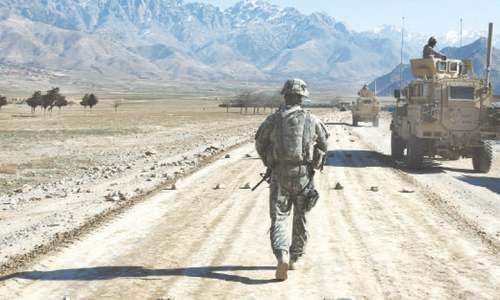
Dozens of districts have fallen to the Taliban since May 1, when US and Nato troops began their final departure from Afghanistan. Like Imam Sahib district in northern Kunduz, their significance often lies in their proximity to roads and major cities.
Imam Sahib is strategically located near Afghanistan’s northern border with Tajikistan, a key supply route from Central Asia.
Rahmani said police and Afghan National Army soldiers had jointly tried to defend the district. He said it still wasn’t clear how many casualties the Afghan National Security and Defence Forces suffered in the protracted battle or how many Taliban were killed or wounded.
Taliban spokesman Zabihullah Mujahed confirmed Imam Sahib district was in Taliban hands.
Several other districts in Kunduz have also fallen to the insurgent group in the latest round of fighting, including Dasht-e-Archi, which neighbours Imam Sahib, said Rahmani, further consolidating local transportation links in the area.
Syed Mohammad Mousavi drove with his family to the relative safety of Kabul from northern Mazar-e-Sharif, about 120 kilometres west of Kunduz on Sunday.
He said people were trying to leave Kunduz city for Kabul fearing additional fighting. The Taliban were all over the road, checking cars. We were very scared, he said after reaching the capital.
In recent days, the Taliban have taken several districts across the three northern provinces of Kunduz, Baghlan and Balkh, said Mousavi. Significantly, witnesses said Doshi district in Baghlan province was in Taliban hands, which if it true gives the insurgent group control of the one road that links five northern provinces to the capital Kabul.
The Taliban have circulated videos on their website and to WhatsApp groups which they claim show government soldiers who have surrendered being told to return to their homes and receiving money from the Taliban. On Sunday, Taliban leader Mawlawi Hibatullah Akhunzada issued a statement ordering his soldiers to treat those who surrender well and display good behavior with them.
But the fighting has been bitter in some districts with both sides suffering casualties. A senior police official speaking on condition he not be identified because he is not authorised to speak to the media said the police fighting in the districts are mostly from poor families. Those families have remained poor despite the trillions of dollars spent in Afghanistan in the past 20 years. They have not seen changes in their lives and are indifferent so they see no difference.
They want to save their lives just for today.” Taliban gains and the steady withdrawal of the remaining 2,500-3,500 US troops and 7,000 Nato forces have lent an urgency to efforts to find a negotiated end to Afghanistan’s protracted conflict.
Talks between the government and the Taliban taking place in Qatar have been stalemated. While Taliban leaders say they are ready to negotiate, observers familiar with the talks say the insurgent movement seems more anxious to chalk up military gains hoping to strengthen their negotiating position.
Published in Dawn, June 22nd, 2021