'Unlikely that faulty tracks responsible for crash': Swati on initial probe into Ghotki train accident

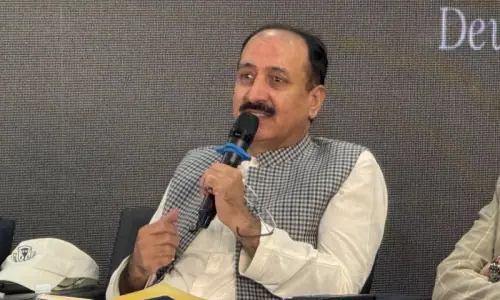
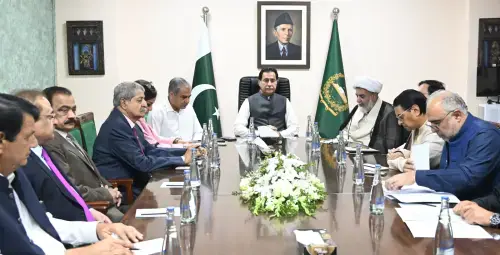
Federal Minister for Railways Azam Khan Swati said on Wednesday that it was unlikely that a fault in an eight-mile (12.87 kilometres) stretch of railway tracks was responsible for the recent train accident in Ghotki.
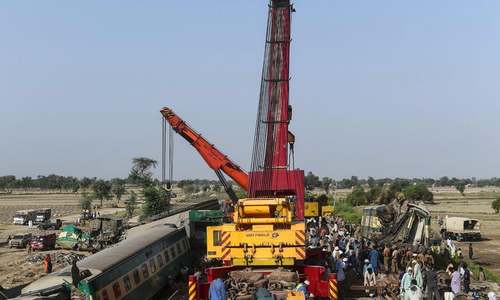
Two passenger trains collided near Daharki on Monday, a city located in the Ghotki district of upper Sindh when a Millat Express train — headed from Karachi to Sargodha — derailed and fell across the "down track". Due to this, it collided with a Sir Syed Express train coming from Rawalpindi, according to a spokesperson for Pakistan Railways.
Addressing a press conference in Lahore, Swati said that the tracks where the incident had occurred had recently undergone maintenance on a stretch of eight miles. Swati added that he himself and other senior personnel had inspected and monitored the accident site themselves so "there is less possibility that there was any fault in the eight miles of (railway) tracks but I can't determine this until the final report arrives."
The railways minister, giving updates on the casualties, said 63 lives had been lost, while 107 were injured, 20 of whom were currently undergoing treatment. Of the 20, three were in critical condition, said Swati.
Sharing more details from the initial report, the minister said the black boxes from the trains had been retrieved. He added that work had not yet started on them for the probe, reassured that a thorough investigation will be conducted. "It will take us at least three to four weeks," he said.
"The accident occurred due to the 12 bogies being derailed," he said, explaining that bogies of the Millat Express train had shifted to the other track and because the time interval between it and the Sir Syed Express train was only of a minute or two, it had arrived suddenly.
"I saw the signs of brakes on the tracks myself," Swati said, adding that there was a need to do a lot more.
"It is possible that it was a matter of less than a minute or few seconds in which the train derailed, people jumped down [to save themselves] and the majority were martyred in that and then the second train comes so they didn't get any chance to reorient.
"The driver of Sir Syed (Express train) didn't get any chance to [avoid a crash] because of which more precious lives were lost," said the railways minister.
He reiterated that although the train track was old, dating back to 1971, and hadn't been upgraded over the years, the testing in the initial probe had shown it to be functioning properly. The bogies were also shown to be within an acceptable working condition, he said.
Swati said one "big factor" identified in the initial probe was the late arrival of the rescue train. "The responsibility for this is on us. Whoever is [found] responsible will have to pay for it; their head has to be rolled."
He added that the initial on-site survey after the accident was also found to be lacking.
When questioned on the delay of officers arriving at the scene, the railways minister assured that it would be part of the inquiry and was being determined. "Whoever has shown negligence will be made responsible."
Swati also said he would be willing to resign from his position as the railways minister if that would cover the losses and casualties in the incident. "If my resignation can put a salve on their [victims'] wounds then I am ready for this."
When questioned on the inquiry's neutrality, Swati said he had decided to also appoint an "experienced army officer with expertise in [conducting] investigations" and another individual known for investigations in the aviation ministry. Their main purpose would be to aid him and independently oversee the investigation, he explained.
The railways minister lamented the lack of upgradation for railways assets and equipment, stressing that improving railway tracks was necessary to boost the economy and reduce input costs of exporters and importers. "You have to upgrade your entire railway track at any cost, there is no other way except for this."
Speaking about the compensation to be paid to the victims' families, Swati stressed that no value could be placed on the injured and the lives lost, adding that they were "precious" and "priceless".
He said that compensation of Rs1.5 million would be given to the family of the deceased, while Rs50,000 to Rs300,000 would be paid to the injured, depending on their condition.