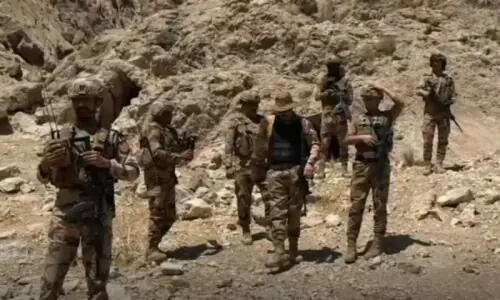
India urges China to expedite army disengagement in Ladakh


India on Friday urged China to expedite the disengagement of military forces from remaining areas in eastern Ladakh, saying a prolongation of the months-long standoff on their disputed border is not in either country’s interest.
Thousands of Indian and Chinese front-line troops disengaged in February from the southern and northern banks of Pangong Lake in the Ladakh region following a series of talks between the two countries.
Senior Indian and Chinese military commanders held their last meeting on March 12. The foreign ministers of the two countries also had a teleconference last month.
External Affairs Ministry spokesman Arindam Bagchi said India hopes that “the Chinese side will work with us to ensure that disengagement in the remaining areas is completed at the earliest.”
“This would allow both sides to consider de-escalation of forces in eastern Ladakh as that alone will lead to the restoration of peace and tranquillity and provide conditions for the progress of our bilateral relationship,” he said.
There was no immediate response from the Chinese side.
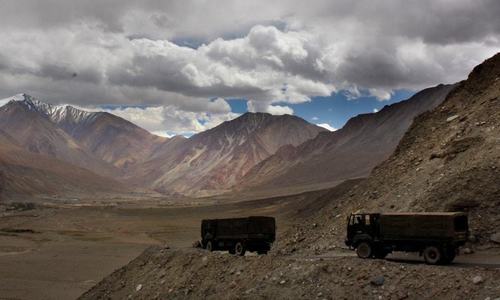
The tense standoff high in the Karakoram mountains began last May, when Indian and Chinese soldiers ignored each other’s repeated verbal warnings, triggering a yelling match, stone-throwing and fistfights at the northern bank of Pangong Lake, where contested ridges push into the glacial lake from eight directions.
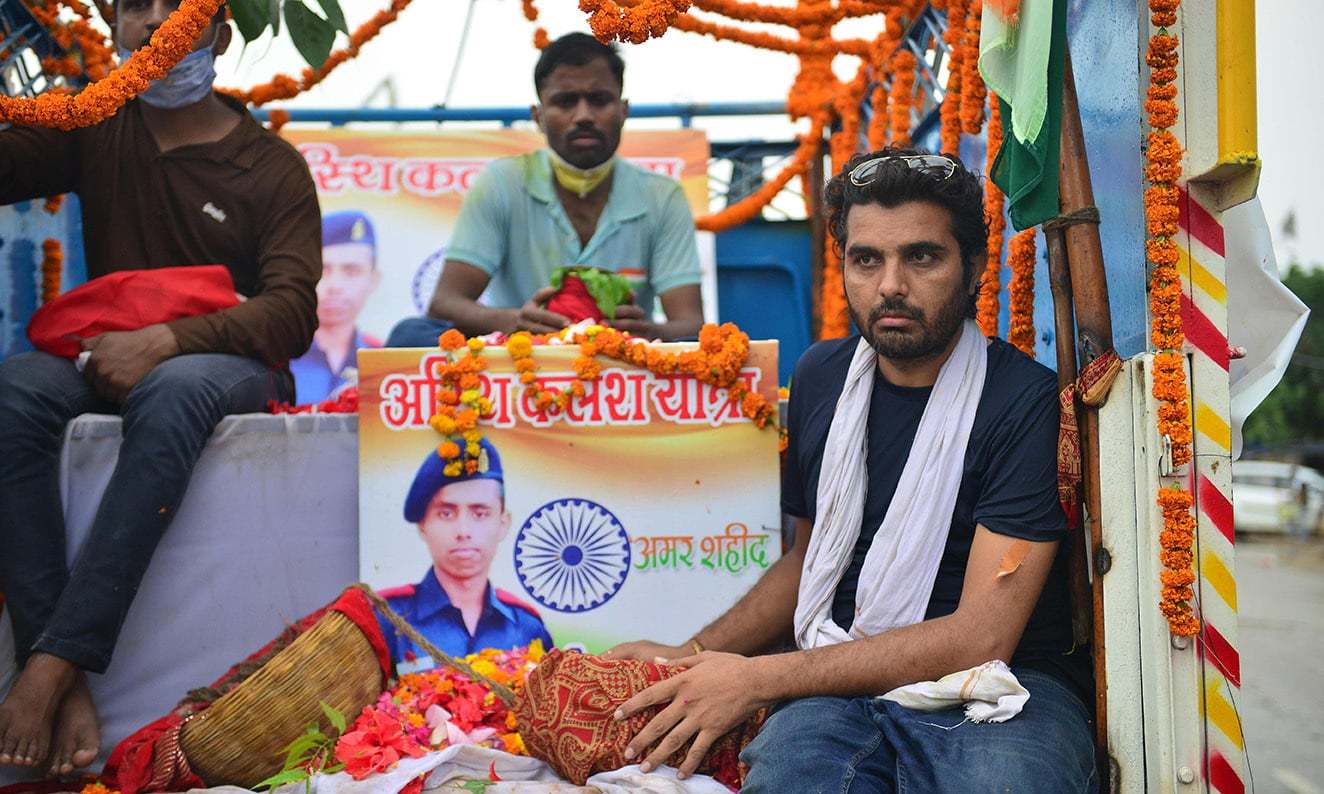
By June it escalated and spread north in Depsang and Galwan Valley, where India has built an all-weather military road along the disputed frontier. Tensions exploded into hand-to-hand combat with clubs, stones and fists that left 20 Indian soldiers dead. China acknowledged six months later that it suffered four casualties.
Troops withdrew from the Galwan Valley shortly after the June clashes and have now done so from Pangong Lake. They remain in a standoff in Depsang and at least two other places, Gogra and Hot Springs.
The two sides fought a border war in 1962 that spilled into Ladakh and ended in an uneasy truce. Since then, troops have guarded the undefined border while occasionally brawling.
The fiercely contested Line of Actual Control stretches from Ladakh in the west to India’s eastern state of Arunachal Pradesh, which China claims in its entirety. It is broken in parts where the Himalayan nations of Nepal and Bhutan sit between India and China.
According to India, the de facto border is 3,488 kilometres (2,167 miles) long, while China says it is considerably shorter. As its name suggests, the Line of Actual Control divides the areas of physical control rather than territorial claims.