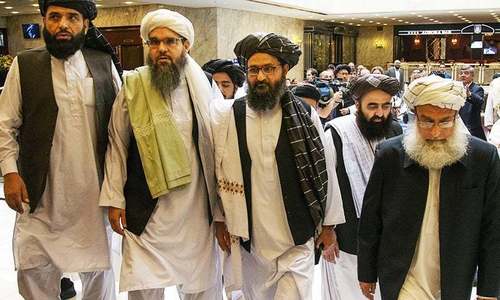
Afghan govt, Taliban agree to accelerate peace talks after Moscow summit


The Afghan government and the Taliban agreed on Friday to try to accelerate peace talks, at a meeting in Moscow that followed an international conference there on the peace process, a senior Afghan official was quoted as saying.
The United States, Russia, China and Pakistan called on Afghanistan's warring sides to reach an immediate ceasefire at the conference, held in Russia just six weeks before a deadline agreed last year to withdraw US troops.
“We expressed our readiness to accelerate the [peace] process,” Abdullah Abdullah, chairman of Afghanistan's High Council for National Reconciliation, told Russia's RIA news agency. “They (the Taliban) did as well.”
Abdullah said the sides had not discussed any specific issues when they met in Moscow on Friday.
Moscow hosted the international conference on Afghanistan on Thursday, at which Russia, the US, China and Pakistan released a joint statement calling on the Afghan sides to reach a peace deal and curb violence, and on the Taliban not to launch any offensives in the spring and summer.
The conference aimed to reinvigorate negotiations that have been taking place between the Afghan government and the Taliban in Qatar's capital Doha, largely stalled over government accusations that the insurgents have failed to halt violence.
The Moscow conference was the first time the US had sent a senior representative to talks on Afghanistan under a format launched by Russia in 2017.
Washington agreed last year with the Taliban to withdraw its troops by May 1 after nearly two decades, and is looking for support among regional powers for its plans for the peace process.