National interest must be above everything else: commanders


ISLAMABAD: Army’s top brass on Tuesday emphasised the need for giving precedence to national interest while tackling the challenges facing the country and putting up a united front.
The call was made during the monthly corps commanders’ conference held at the General Headquarters. Army Chief Gen Qamar Bajwa chaired the meeting, which was attended by the corps commanders and principal staff officers posted at the GHQ.
The Inter Services Public Relations said the meeting conducted “a comprehensive review” of the security environment, both regional and domestic.
The external security environment is shaped by developments in the neighbourhood and actions of the regional actors. Meanwhile, the domestic security environment is heavily influenced by governance, political stability and economic health, in addition to traditional and non-traditional threats.
“Commanders noted that the enormity of the security challenges warrants a holistic national response, keeping national interest above everything else,” the ISPR said.
Reiterate Pakistan’s ‘unwavering support’ for Kashmiris’ struggle for right to self-determination
The commanders’ message came a day after military spokesman Maj Gen Babar Iftikhar called on the opposition to keep the army out of politics so that it could focus exclusively on its security role, adding that politics should be left to politicians.
The commanders recalled the sacrifices rendered by the military in the fight against terrorism and underscored the need for making that progress sustainable.
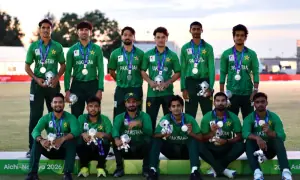
The ISPR noted that dividends of the improved security situation, including return of international cricket to Pakistan, were a result of numerous sacrifices rendered and challenges overcome to eliminate extremism and terrorism from the country.
The corps commanders, while discussing the security situation in the newly merged districts of Khyber Pakhtunkhwa that earlier formed the tribal areas, emphasised the need for “early implementation of reforms” so that law enforcement agencies could be enabled to achieve sustainable peace in the area.
Gen Bajwa sounding optimistic noted: “We will stay the course InshaAllah.”
In a reference to the conventional and sub-conventional threat posed by India, the commanders underlined the necessity of “continuous operational preparedness” to thwart the adversary’s sinister designs.
“The forum also expressed complete satisfaction over countering hostile intelligence agencies’ design to disrupt peace and progress, particularly in Balochistan and Gilgit-Baltistan, which lay exposed to the entire world, thus vindicating Pakistan’s stance on role of hostile agencies in training and funding of terrorists,” the ISPR said.
EU DisinfoLab’s Indian Chronicles, Gowswami WhatsApp transcripts and more lately the report of UN Analytical and Monitoring Team have exposed India’s sinister designs against Pakistan. A dossier too was shared with the international community by the government containing proofs of Indian sponsorship of terrorism in Pakistan.
The commanders reiterated Pakistan’s “unwavering support” for the Kashmiris’ struggle for right to self-determination and hailed the increased global recognition of the worsening humanitarian and security crises in occupied Kashmir.
The participants of the conference hoped for “peaceful and stable Afghanistan”.
The talks between the Taliban and Afghan government in Qatar are deadlocked because of deep mistrust between the two sides and conflicting priorities for the dialogue. Moreover, rampaging violence in Afghanistan has undermined the peace process and people’s trust in it.
The new Biden administration in Washington has, meanwhile, expressed its intention to review the deal with the Taliban to assess if they “are living up to their commitments to cut ties with terrorist groups, to reduce violence in Afghanistan, and to engage in meaningful negotiations with the Afghan government and other stakeholders”.
Published in Dawn, February 10th, 2021