ECP explains its stance on secrecy in foreign funding case

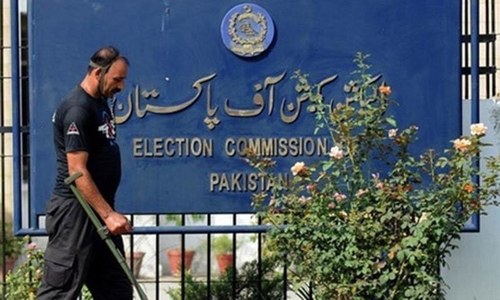
ISLAMABAD: The Election Commission of Pakistan (ECP) has once again explained its position over the extent of secrecy in the foreign funding case against the ruling Pakistan Tehreek-i-Insaf.
“There seems (to be) confusion about open/closed hearing of the case. It is again clarified that there will be open hearing of the case before the commission once the scrutiny committee submits its report,” ECP spokesman Nadeem Qasim said in a statement issued here on Saturday.
He said in-camera proceedings would be conducted before the scrutiny committee though it was being carried out in the presence of both parties.
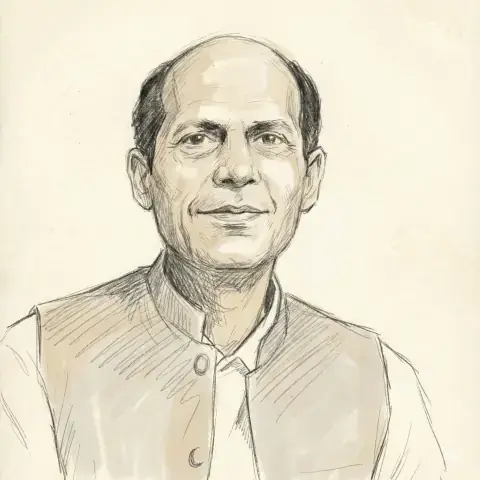
Reacting to the latest ECP statement that the scrutiny would be conducted in camera while the trial would be open, the petitioner and PTI founding member Akbar S. Babar stated that keeping the scrutiny secret was in violation of ECP’s own order of May 30, 2018 that rejected PTI’s application to keep scrutiny and record secret.
The ECP order had explicitly stated that all record before the committee was public record.
“So why 23 PTI bank statements acquired on SBP instructions and other PTI financial documents not only were kept secret from the public but also from the petitioner against the law and all norms justice and transparency,” he asked.
The petitioner said the first point of the scrutiny committee’s terms of reference (TOR) stated that the inquiry would be conducted in the presence of the two parties.
Whereas, in reality, he was being asked to rubberstamp a scrutiny blindfolded, the petitioner regretted.
“This is unacceptable and will never be acquiesced,” he remarked before reiterating his concerns about the committee that had been validated by the ECP in its order dated August 27, 2020 when it rejected the committee’s report of August 17, 2020 by stating “the committee neither scrutinised the record nor evaluated the evidence from the documents”.
The petitioner said Prime Minister Imran Khan offered an open trial of PTI foreign funding case and reposed full confidence in the ECP, while his writ petition questioning the ECP jurisdiction had been pending before the Supreme Court since January last year. He asked as to what had changed since January 2017 when Mr Khan accused the same constitutional body of ‘bias’..in favour of the petitioner (Akbar S. Babar). He said if PM Khan was serious in his offer, he should have withdrawn his writ petition pending before SC and unfetter the scrutiny committee from keeping PTI records secret from the petitioner and public.
Published in Dawn, January 24th, 2021