India's foreign minister says trust with China 'disturbed' after border clash

India's Foreign Minister Subrahmanyam Jaishankar said on Tuesday that trust with China had been deeply impaired after last summer's border clash which resulted in the first loss of lives in 45 years.
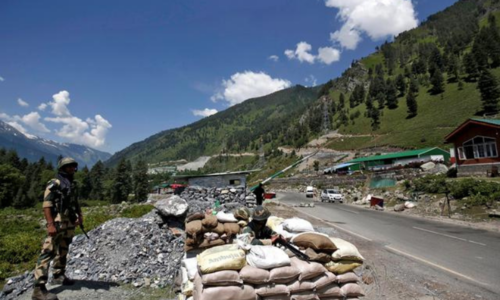
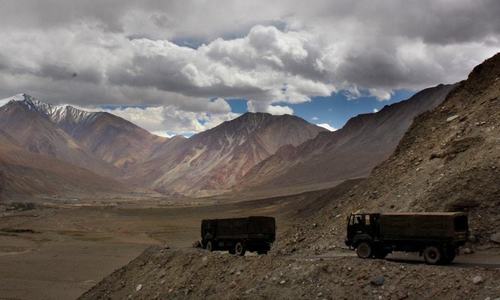
Troops remain locked in a stand off at the bitterly contested border in the western Himalayas, the most serious military crisis between the nuclear-armed neighbours for decades.
“After 45 years, you've actually had bloodshed on the border. And that's had a huge impact on public opinion and politically [...] Really the impact of trust and confidence in India where China and their relationship is concerned. That has been profoundly disturbed,” Jaishankar told the Reuters Next conference, speaking from New Delhi.
Separately, the Indian army chief during a press talk today said that he expected talks to lead to an amicable solution to the border crisis with China.
Gen Manoj Mukund Naravane said Indian and Chinese troops were holding their positions, although Chinese troops had pulled back from some training areas on the adjacent Tibetan plateau.
“If the talks get prolonged, so be it,” he told reporters in an annual briefing on the situation in India's Ladakh region, in the country's northern tip.
“We are prepared to hold our ground where we are, for as long as it takes, to achieve our national goals and interests.
Several rounds of talks have so far made little headway in deflating tensions over the disputed border. Naravane said he expected another round of talks soon.
Indian and Chinese troops remain locked in a high-altitude confrontation along the border in Ladakh, where soldiers clashed in brutal hand-to-hand combat last June.
Both sides have since said that they are looking to find ways to de-escalate the situation on the border, but talks have made little headway and both sides have maintained a heavy military deployment through the freezing winter months.
Last month, Indian Defence Minister Rajnath Singh said there had been “no meaningful result” from several rounds of diplomatic and military talks aimed at de-escalating the confrontation.
“If the status quo continues, it is obvious that the deployment won’t come down,” Singh had said during an interview with Reuters partner ANI.
But, he said, both sides were still exchanging messages over the border situation and another round of military talks was in the offing.