Government takes note of surging egg, ghee prices



ISLAMABAD: Finance Minister Hafeez Shaikh has directed the Commerce Ministry to hold a special meetings with stakeholders to control surging egg and vegetable ghee rates.
Chairing the National Price Monitoring Committee (NPMC) meeting on Monday, the minister urged the provincial governments to strictly monitor egg and ghee prices.
Shaikh further directed the secretary commerce to call a meeting with representatives of the provincial governments and Federal Board of Revenue to take further steps in this regard.
Secretary Ministry of Food Security Ghufran Memon briefed the meeting about the current status of wheat and sugar stocks. The improved availability of both commodities has resulted in significant decline in prices for the consumers, he claimed.
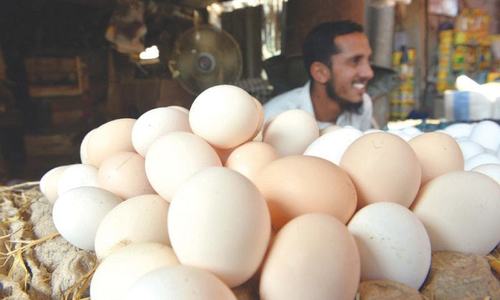
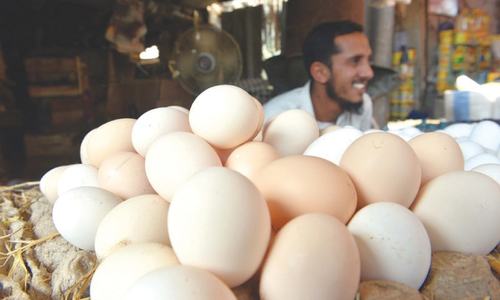
Last week, egg prices all over the country rose to the hightest-ever peak of Rs200-240 per dozen. Egg prices in Quetta, the provincial capital of Balochistan, are pegged at Rs240 per dozen while in other major cities including Karachi and Lahore see the produce at Rs200 per dozen.
Consumers said the government has utterly failed in checking the egg price hike, leaving them at the mercy of poultry farmers and retailers.
A large number of families in urban areas across the country are buying two to six eggs instead of a dozen or more eggs in one go to cut down on expenses.
The NPMC reviewed the price trend of essential commodities. Finance Secretary Naveed Kamran apprised the committee that there had been a consistent decline in the weekly Sensitive Price Index (SPI) over the last four weeks. During the lase week, the SPI registered a decline of 0.22pc, notably in essential food commodities namely wheat, tomatoes, onions, potatoes and chicken.
Published in Dawn, December 22nd, 2020