0
0

Indian movie Kesari (2019) is a ridiculous attempt to obliterate the facts and reality of the battle of Sragarhi. The battle was not, in the first place, fought between Orakzais and Sikhs as depicted in the movie. It was rather one of a series of battles between the mighty British empire and the tribesmen of Tirah region in the decade of 1890s.
The tribesmen challenged the British many times on various fronts to thwart their imperialistic designs of making Tirah region as their colony. These constant clashes finally lead to the Tirah campaign or Tirah expedition in October 1897. Sikhs were made pawn in the British great game of colonisation.
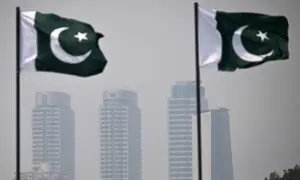
The place on which the battle of Sragarhi was fought is not Samnabut Samana in Khyber Pakhtunkhwa which to this date contain forts like Lockhart (1891) and Gulistan with Pakistan flag hoisted on its tall stony minarets.
We have so far received only one version of the events as stated by British military writers which is not sufficient to corroborate with facts. The other side of the story is not yet known, so we cannot deduce or infer the truth from one side historians.
Secondly, As there was no survivor of the battle of Sragarhi so we don’t exactly know what really happened on that fateful day i.e Sept 12, 1897. The film maker has made an attempt to make a mountain of a mole hill and twisted the facts against one of the tribes living in Tirah i.e. Orakzais.
Fact of the matter is that courageous tribesmen persistently attacked and challenged the British advances into Tirah region in all sides including Khyber Pass. The film maker is oblivious to the fact that the Tirah region has a history of being the citadel of Islamic monotheism and have fought against the Mughals in 17th century or more precisely against Akbar’s religion of ‘Deen-i-Elahi’ and also valiantly against the Sikh rulers in Peshawar. Sikhs were over thrown by The British in Anglo-Khalsa wars 1846-50.
Moreover,a nother fact is that Sikh community has a history of living as Hamsayas in the Tirah region from Mughal days and enjoyed till this day a peaceful life and doing business and owns properties which undoubtedly exhibits the hospitable and generous nature of the people of Tirah and speaks volumes of their traditional codes of conduct. It’s a conjecture of my of my own that Sikh residents of Tirah must have been part of the tribesmen Lashkar on that day as well fighting against the British army for protection of Tirah region.
Regarding number of tribesmen Lashkar we cannot say with certainty since we don’t have recorded history of Tirah region written by Pakhtoon historians. The matter is open to research.
It is again a fact that the British forts and other posts on Samana ridge were established on precipices and well-fortified and adequately manned by trained personnel.Sragarhi post if examined minutely will testify that it was located in a place where it was exceedingly inaccessible for humans due to its topography and terrain.
On the other hand, the resources of tribesmen Lashkar who were coming from the Khanki and Mastura valley on foot with meagre weapons could not be compared with the resourcefulness of the then superpower, the British empire.
Furthermore,the chronicles of British writers suggests that the British personnel present in twin forts of Gulistan and Fort Lockhart did not bother to come to the rescue of the low rank employees who were posted in Sragarhi post. They were primarily concerned about their own, lives and safety.
Awarding Indian Order of Merit (IOM) and erecting a memorial does not make it an act of bravery as IOM was awarded to so many others during the Tirah expedition. Quite a few Tirah memorials have also been erected in UK including one in Oxford which highlights the obstinate resistance shown to the Britishers by the tribal lashkars.
Again, it is shrouded in doubts that how many tribesmen sacrificed their lives in this particular battle but the fact remains that Sragarhi post was captured, people inside were burnt, post was razed to the ground and flag of tribal lashkar was hoisted in few hours.
The film maker has also deliberately tried to avoid showing the slogans raised by the tribal lashkar during the fight. War slogan of the various fights in Tirah region has always been “Allah-o-Akbar” (Allah is the Greatest). As I write these lines, sitting on the Samana ridge, I can hear the valley echoing with Azaan (call for prayers) from the nearby mosque.
Published in Dawn, October 19th, 2020