Flawed mechanism, lethargic officials nullify Punjab govt’s price-control efforts



LAHORE: Profiteers continue fleecing the consumers as ‘unenthusiastic’ exercise on the part of administration to control prices of essential food items is nullifying the advantage of arrival of imported wheat in the local market as well as slide of dollar against the rupee.
Though the government has stepped up its efforts to control prices of essential items, particularly of wheat flour, sugar, fruits and vegetables, especially after it was targeted by the opposition over the issue in its agitation, but to no avail.
For instance, wheat flour (chakki) that was being sold at Rs48 per kg in April, is now costing over Rs78 in the open market. Whereas the 20kg bag produced by flour mills that was being sold at Rs805 per bag then, is either unavailable or is being traded at Rs1,050 per bag.
The official rate for the 20kg flour mill bag is Rs860 as the government is supplying subsidised wheat to the millers. However, one fails to find the commodity at the official rate in most of the city areas.
Likewise, tomato prices went into three digits during Ramazan as usual and potatoes were sold for up to Rs80 per kilogram then. Surprisingly, the tomato prices rather went further up after Ramazan and hit ‘double century’, while rates of vegetables that had never crossed Rs100 per kg, have mostly crossed Rs150 per kg.
The reasons put forward by the traders, included a ban on transportation in the wake of the coronavirus outbreak, around 45 per cent devaluation of rupee against dollar, and damage to vegetable crops caused by heavy rains during the monsoon.
The flour availability situation improved to some extent after Chief Minister Usman Buzdar, in the light of recent directions by Prime Minister Imran Khan for controlling inflation, assigned each cabinet member one district to monitor prices of the essential items.
Ironically, three ministers directly related to production and supplies of food items have tested positive for the virus. They are Food Minister Abdul Aleem Khan, Agriculture Minister Syed Hussain Jahania Gardezi and Industries Minister Mian Aslam Iqbal.
On government’s part, all Punjab cabinet members have been directed to spend two days a week in their home districts to personally monitor the availability of essential commodities, and prices, particularly of flour and sugar.
Similarly, Chief Secretary Jawad Rafique has also allotted one district to each departmental secretary and other senior officers with the same assignment.
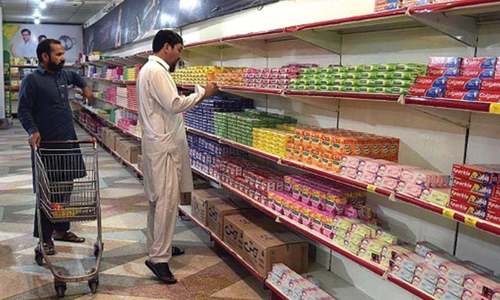
The government has also ordered setting up Sahulat bazaars at tehsil level for provision of the commodities to the consumers at official rates and these makeshift markets have begun working at Shahdara, Shadman, Shalimar, Gunj Bazaar, Bhatta Chowk and Makkah Colony in Lahore from today (Oct 18). But, consumers say these are too few for a population of over 12 million souls and also too small as each Sahulat bazaar contains not more than a dozen or so stalls.
Besides, the officials responsible for implementation of government rates are too lethargic, and seem to be hand in glove with profiteers.
Amer Kaleem, a customer who was overcharged by a vendor at Bhatta Chowk Sahulat Bazaar complained that after contacting various officials “I was told to first complete the deal and only then I could submit my complaint.”
Zafar Ali, a consumer at Shadman Model Bazaar, saw no let up in fruit and vegetable prices even after the Covid lockdown. “Good quality tomatoes are still faring at Rs140 per kg and similar is the case with other vegetables”, he regretted.
Consumers Solidarity Association president Mohsin Bhatti says the real problem is lack of any mechanism to regulate prices. He alleges that unlike in the past, no senior official was personally monitoring the auction process in the markets, where prices for retail business are manipulated, in most cases “increased by 400 per cent”.
Being an ex-member of the Punjab market regulation committee during Shehbaz Sharif government, he says deputy commissioners, who act as price controllers, mostly lack basic information about the real cost of an item, freight and taxes imposed on it and rely on the ‘fake’ data shared by traders’ bodies while determining the retail prices.
Mr Bhatti also points out the absence of dedicated price control magistrates, arguing that the officials assigned additional duty in this respect perform it in a casual way. He says that a shopkeeper challaned once is rechecked after over a month and in the meantime he is free to fleece the customers.
“Dedicated staff for monitoring prices at all levels [wholesale and retail] is the answer to the problems being faced in regulating the markets,” he suggests.
Published in Dawn, October 19th, 2020