ISLAMABAD: The history of Rawalpindi came to life on Saturday night when a longtime resident of the garrison city, walked his guests through a bygone era of his hometown.
Ali Khan is the author of a unique coffee table book, Rawul Pindee: The Raj Years 1848-1947. The book combines some rare images of everyday life in one of the largest military cantonments in India with the sensitivity of someone who was born and raised there.
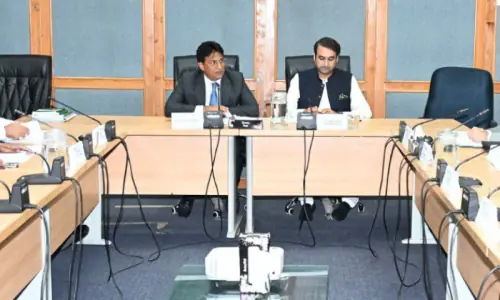
A sense of nostalgia prevailed throughout the multimedia presentation that was organised by the Asian Study Group. It evoked the colonial period through a treasure trove of vintage photographs, long forgotten historical facts and figures that had shaped the history of Rawalpindi and its surroundings.
Mr Khan explained that his presentation was based on his book and referred to it as a labour of love.
An important regional centre in the 15th century, Rawalpindi was occupied by the Sikhs in 1765 and later taken over by the British East India company.
The guests were told that under the British rule Rawalpindi was connected to the Indian railway network and it soon became the largest garrison city in the western part of British India. Today, old colonial-era military and administrative buildings dot the cantonment area.
The photographs for the presentation largely came from Neville Thomas in New Zealand. They had been taken by Hal Waters, his father-in-law, who had grown up in Rawalpindi, where his father was the headmaster of the Station European School from 1884-1912. The presenter explained that Hal Waters was an avid photographer and he took some captivating images of his life and surroundings, preserving glimpses of everyday life like children doing a tableau.
A 120-year-old photograph showed a little girl playing Little Miss Muffet with a cloth spider dangling from a thread near her. “When I went to visit Station School, I found children doing similar activities. Nothing had changed in a hundred years,” he said.
The guests were shown pictures of an old statue of Queen Victoria, which stood at the corner of Flashman’s Hotel. Images of Mall Road, Murree Road that used to be dirt roads, pictures of the future King George and Queen Mary visiting Rawalpindi in 1905, and there were photographs of them with the Maharajas.
Published in Dawn, October 18th, 2020