Decision on NAB plea against acquittal of PM’s adviser reserved



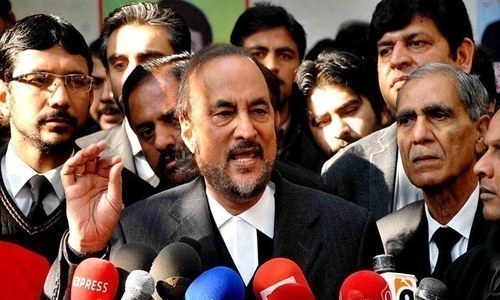
ISLAMABAD: The Islamabad High Court (IHC) on Monday reserved decision on appeals filed by the National Accountability Bureau (NAB) against acquittal of Adviser to the Prime Minister on Parliamentary Affairs Babar Awan and retired Justice Riaz Kiani, and against the dismissal of the acquittal plea of co-accused former law secretary Masood Chishti in the Nandipur reference.
The IHC division bench, comprising Chief Justice Athar Minallah and Justice Aamer Farooq, heard the appeals.
Justice Minallah remarked that NAB was playing havoc with the governance system.
He asked as to whether NAB wanted to withdraw the ‘relaxation’ for bureaucrats. He warned that the bureaucracy shouldn’t be dealt with like this since it is harmful for good governance.
The NAB prosecution informed the court that the Ministry of Water and Power had sought legal opinion from the Ministry of Law and Justice for an agreement with the Chinese company about the Nandipur power project.
He said the law ministry delayed furnishing the legal opinion which resulted in escalation of the cost and also hindered the commencement of the project.
The Nandipur power project was approved by the Economic Coordination Committee of the cabinet on Dec 27, 2007, at a cost of $329 million. After the approval, a contract was signed on Jan 28, 2008, between the Northern Power Generation Company and the Dong Fang Electric Corporation of China, and two consortiums - Coface for 68.967 million euros and Sinosure for $150.151m - were set up for financing the project.
The water and power ministry sought a legal opinion on the project from the law ministry in accordance with the schedule of agreement in July 2009 but the accused repeatedly refused to offer one.
The water and power ministry also failed to take any concrete step on time to resolve the issue and the matter remained pending.
Justice Minallah inquired from NAB whether a post facto approval could be sought from the law ministry after signing of the agreement. He sought from the prosecution any document to substantiate the claim that Masood Chishti being the then law secretary had acted in violation of the rules of business.
The court observed that the case was based on the agreement with the foreign country, adding if such practice continued it would discourage foreign investment.
“Did the foreign company was informed that the agreement was signed without seeking prior approval of the law ministry,” the bench asked.
“Prima facie, the case could not be made out, if there was no criminality then the reference would cause embarrass for the government,” it added.
The bench then reserved the decision on all the appeals related to the Nandipur reference.
Published in Dawn, October 6th, 2020