India, China commanders meet again on ending border standoff

Senior Indian and Chinese military commanders are holding talks on Monday aimed at resolving a tense months-long standoff along their disputed border in the mountainous Ladakh region.
Details of the talks, held on the Chinese side in the Moldo area facing the Indian-controlled Ladakh region, weren’t immediately disclosed.
For the first time, a senior Indian foreign ministry official was also participating in the military-level meeting, said an Indian official, speaking on condition of anonymity in line with government regulations. There was no information immediately available from Beijing.
Despite several rounds of talks by military, diplomatic and political officials, including negotiations between the two countries’ foreign and defence ministers in Moscow this month, the border tensions have persisted.
Monday’s military-level talks come less than two weeks after the two nations’ foreign ministers met on September 10 and agreed that their troops should disengage from the tense border standoff, maintain proper distance and ease tensions.
The foreign ministers did not set any timeline for the disengagement of the tens of thousands of troops, backed by artilleries, tanks and fighter jets, that have been in the region since the standoff began in May.
Military experts have repeatedly warned that any mistake or miscalculation from either side can have disastrous consequences beyond the cold desert region of Ladakh.
Both India and China have provided little information, but media in the two countries have given extensive coverage to the escalating tensions, which have dramatically changed their bilateral relations.
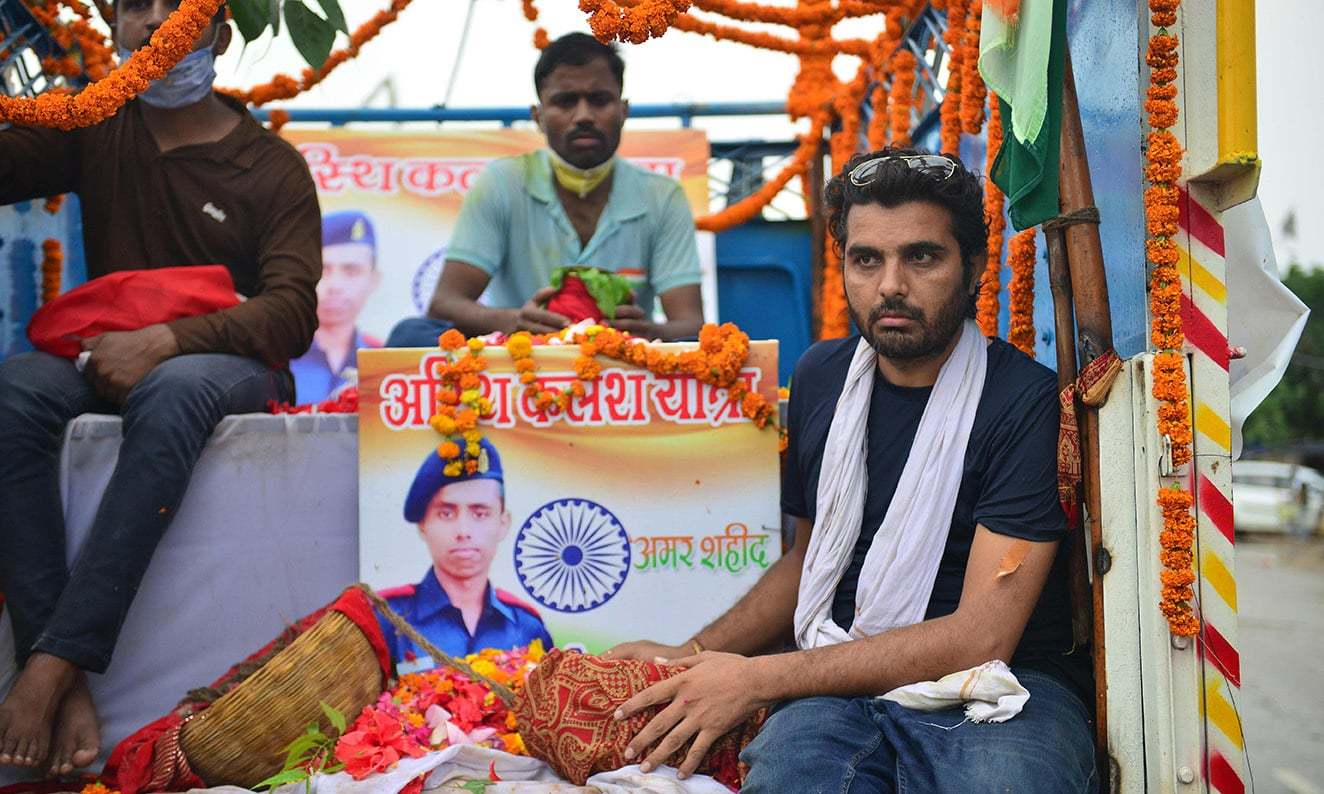
The standoff in Ladakh escalated in June to the deadliest violence between the sides in decades — a clash on a high ridge between soldiers using clubs, stones and their fists. Twenty Indian soldiers were killed. China is believed to have also suffered casualties, but has not given any details.
After that clash, the two countries partially disengaged from the site in the Galwan Valley and at least two other places, but the crisis has continued in at least three other areas, including glacial Pangong Lake.
In recent weeks, the Asian giants have accused each other of sending soldiers into each other’s territory in the Pangong area and firing warning shots for the first time in 45 years, raising the spectre of a full-scale military conflict.
Relations between the two countries have often been strained, partly due to their undemarcated border. They fought a border war in 1962 that spilled into Ladakh and ended in an uneasy truce. Since then, troops have guarded the undefined border, referred as the Line of Actual Control, while occasionally brawling. They have agreed not to attack each other with firearms.
The fiercely contested control line separates Chinese- and Indian-held territories from Ladakh in the west to India’s eastern state of Arunachal Pradesh, which China claims in its entirety. It is broken in parts where the Himalayan nations of Nepal and Bhutan border China.
According to India, the de facto border is 3,488 kilometres (2,167 miles) long, while China says it is considerably shorter. As its name suggests, it divides the areas of physical control rather than territorial claims.