India’s allies told to work for restoration of occupied Kashmir statehood



WASHINGTON: The International Crisis Group (ICG) has urged India’s international allies to “strongly encourage it to restore Kashmiri statehood, free detained politicians, and end security forces’ abuses against civilians”.
The ICG, a global think tank, advises India in its new report to re-engage with held Kashmir’s political class and end security forces’ abuses in the occupied valley and urges New Delhi’s “international partners should press it in that direction”.
Also read: One year of India's clampdown in occupied Kashmir — here's everything you need to know
The report — “Raising the Stakes in Jammu and Kashmir” — warns that India’s recent actions have increased the “risks of an incident setting off an unintended military escalation” between the region’s two nuclear powers.
The ICG asked both India and Pakistan to dial down bellicose rhetoric and respect a ceasefire they agreed to in 2003.
The ICG encourages both states to review the measures taken during 2003-07 to promote peace in Kashmir and between India and Pakistan, including an agreement to a ceasefire on the Line of Control (LoC).
ICG says Delhi’s ‘heavy-handed tactics’ in occupied valley increased ‘homegrown militancy’
During the same period, militancy waned and India and Pakistan opted for bilateral talks and several confidence-building measures, including the opening of the LoC to travel and trade for Kashmiris on both sides.
These efforts opened space for dialogue between New Delhi and major Kashmiri stakeholders, including the All Parties Hurriyat Conference, which is “considered the most representative political force in Indian-controlled Kashmir”, the report adds.
It notes that during this period two successive Indian prime ministers from both ends of the political spectrum — the Indian Congress Party and the Bharatiya Janata Party — also agreed to address Kashmiri grievances through political means.
The report, however, points out that after being re-elected in May, the Modi government rejected Pakistan’s offers to resume bilateral dialogue and Islamabad itself withdrew that offer after Aug 5 last year when New Delhi illegally merged the occupied territories.
The ICG also notes that Pakistan’s reaction to India’s illegal annexation of occupied Jammu and Kashmir has “largely been limited to attempts at rallying international opinion against New Delhi’s moves”.
But since last year, India has used “heavy-handed tactics” in the occupied valley which have “only exacerbated the Kashmir alienation and raised tensions with Pakistan”.
This also led to an increase in “homegrown militancy”, which “does not necessarily rely on orders from across the border”, the report adds.
The ICG notes that the suicide bomber behind the Pulwama attack of February last year, which triggered the last escalation between India and Pakistan, was also a local.
Another attack by these homegrown militants could increase tensions between the two countries as “India will almost certainly blame Pakistan, … increasing the risks of confrontation”, the report warns.
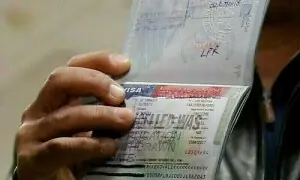
The report notes that in early 2020, the Indian government passed a new domicile law, allowing Indian citizens from elsewhere in the country to become permanent residents of Jammu and Kashmir for the first time.
Such measures “have kindled widespread anger among Kashmiris, who see them as part of a strategy for changing the region’s ethnic, social, and religious contours”, the report warns.
Explaining the cause of continued unrest in occupied Kashmir, the ICG notes that “the region is devoid of democratic oversight or local political representation. A year after Kashmir’s entire political class was arrested, some of its most prominent politicians are still in detention, while those who have been released have, for now, been largely cowed into silence.”
Published in Dawn, August 10th, 2020