Dollar surges against rupee



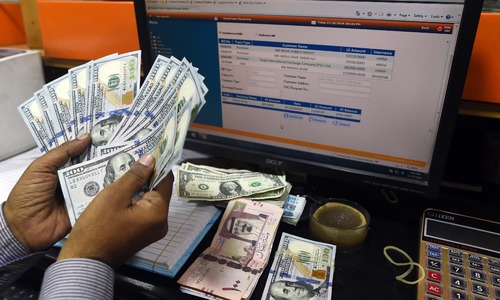
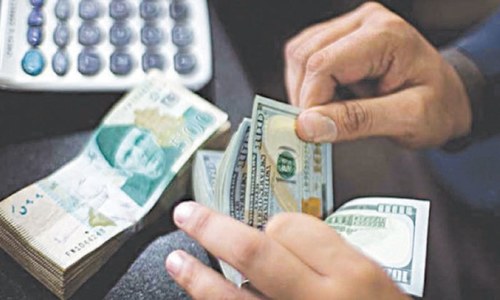
KARACHI: The dollar rose to the highest level of FY21 against the local currency on Monday, reflecting its increasing demand.
Currency dealers in the interbank market said the dollar was traded as high as Rs168.70 and closed at Rs168.30 after a gain of about 97 paisas during the day.
However, in the second session — which was for the next day (tomorrow value) — it rose to Rs168.75, mounting further pressure on the local currency.
The dollar had hit peak on 27 March when it was traded at Rs169.90 in the interbank. The exchange rate remained under pressure particularly after the coronavirus outbreak. The country witnessed an outflow of over $3.5 billion from the domestic bonds while the inflow of foreign direct investment also fell month-on-month in April and May.
“Two large banks were very active during the day, particularly National Bank was the biggest buyer which pushed the price as high as Rs168.70 in the first session from beginning of the day with Rs167.45,” said a senior banker.
“A foreign bank aggressively began buying dollars in the second session and pushed the price as high as Rs168.75,” the banker continued.
The dollar gained against the rupee after coronavirus outbreak in March, but the country’s foreign exchange reserves were boosted at the end of the last quarter of FY20. Despite the country’s reserves now nearing a three-year high, the dollar is still gaining. Currency dealers said the imports have started rising which created demand for the greenback.
The banker said the importers were also in the queue to buy dollars which increased both the demand and the prices. They said the NBP was probably purchasing for some large payments that may not be on Tuesday.
However, currency dealers also believe that import was increasing due to higher economic activities in the country. They said the imports in June increased by 30 per cent compared to May.
The government reduced imports by policy to bridge the trade deficit which was the main contributor towards the record $20bn current account deficit in 2018.
In reply to a question as to why the dollar gained against the rupee despite high foreign exchange reserves, the banker said it was due to lack of confidence over the actual position of forex stocks.
“The exports could not increase in FY20 while the SBP’s reserves do not reflect the actual position since more than 40pc of their holding belongs to two Arab countries,” said the banker.
Currency dealers said the country got the relief from G20 for deferment of payments but the market knows that it would have to repay the debt in FY21 which weakens the exchange rate regime.
Published in Dawn, July 21st, 2020