Pakistan-born scientist becomes first woman to head section at renowned body


 118
118


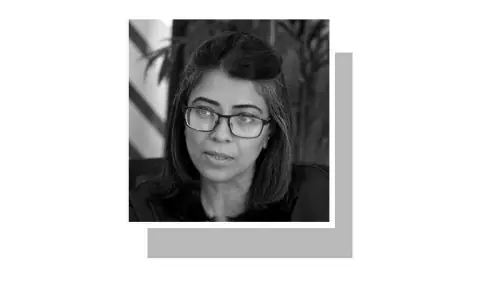
KARACHI: Pakistan-born scientist Asifa Akhtar has become the first international female vice president of the biology and medicine section at Germany’s prestigious Max Planck Society.
The Max Planck Society is Germany’s most successful research organisation. Since its establishment in 1948, no fewer than 18 Nobel laureates have emerged from the ranks of its scientists, putting it on a par with the best and most prestigious research institutions worldwide.
During her term of office, Ms Akhtar will be in charge of the institutes of the sections and will also be the contact person for the Max Planck Schools.
“My heart beats for the young scientists,” the society’s website quoted Akhtar as saying.
“Academic science is a beautiful example of integration because you have people from all over the world exchanging knowledge beyond boundaries, cultures or prejudice,” she told the society in an interview.
As the vice president, Ms Akhtar also wants to advance the issue of gender equality. “Gender equality needs to be worked on continuously. There are outstanding women in science and we should make all the efforts and use our resources to win them for the Max Planck Society,” she said.
To enable gender diversity in various career domains, she said, the society needed to be more accommodating and understanding. “If we want women to progress in science, we need to enable practical solutions such as childcare and time-sharing or home office options,” she added.
Born in Karachi, she obtained her doctorate at the Imperial Cancer Research Fund in London, UK, in 1997.
She then moved to Germany, where she was a Postdoctoral fellow at the European Molecular Biology Laboratory (EMBL) in Heidelberg and the Adolf-Butenandt-Institute in Munich from 1998 to 2001.
Ms Akhtar was awarded the Early Career European Life Science Organisation Award in 2008, EMBO membership in 2013, and the Feldberg Prize in 2017. She was also elected as a member of the National Academy of Science Leopoldina in 2019.
Published in Dawn, July 15th, 2020