KARACHI: In view of falling inflation, the State Bank of Pakistan (SBP) on Friday slashed the policy interest rate by 100 basis points to eight per cent to provide easy liquidity to help businesses under stress owing to the Covid-19 pandemic.
This was the fourth reduction within two months and cumulatively interest rates were slashed by 5.25 per cent.
“The inflation outlook has improved further in light of the recent cut in domestic fuel prices,” said the SBP, adding that inflation could fall closer to the lower end of the previously announced ranges of 11-12pc this fiscal year and 7-9pc next fiscal year.
The central bank said inflation could fall further than expected if the economic activity failed to pick up as expected next fiscal year. On the other hand, there were some upside risks from potential food-price shocks associated with adverse agricultural conditions, it added.
However, the SBP maintained that easier monetary policy could neither affect the rate of infection transmission nor prevent the near-term fall in economic activity due to the lockdown; it could provide liquidity support to households and businesses to help them through the ensuing temporary phase of economic disruption.
The bank said the swift and forceful monetary easing of 525 basis points in the two months since the beginning of the crisis and its measures to extend principal repayments and provide payroll financing supported liquidity.
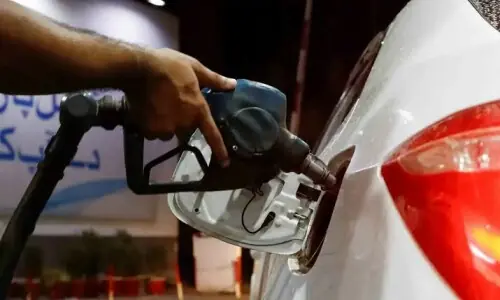
The State Bank noted three key developments since the last Monetary Policy Committee meeting on April 16 this year: the government has significantly reduced petrol and diesel prices by 30-40pc, begun easing the lockdown and due to timely policy actions and international assistance, the initial volatility observed in domestic financial and foreign exchange markets has somewhat subsided in recent weeks.
The SBP said that in the light of preliminary evidence from China and other countries that eased lockdowns earlier than others, activity in service sectors and consumption, which formed a large part of the domestic economy, could remain subdued for a longer time.
It said large-scale manufacturing (LSM) witnessed a steep decline of 23pc year-on-year in March due to withdrawal from economic and social activities aimed at slowing the spread of coronavirus.
“High-frequency indicators of demand such as credit card spending, cement dispatches, credit off-take and POL (petroleum products) sales also suggest a marked contraction in domestic economic activity in both March and April,” the SBP said, adding that after showing signs of recovery earlier this year, both consumer and business sentiments had fallen sharply.
It said the current account deficit continued to narrow even though both imports and exports declined. Exports fell by 10.8pc and 54pc and imports by 19.3pc and 32pc in March and April, respectively.
“While remittances have so far remained resilient, there are potential downside risks given the economic difficulties across the world, especially in oil-exporting countries,” it added.
However, the SBP maintained that despite the challenging global conditions, the outlook for the external sector broadly remained stable.
It said that after rising by 17.5pc year-on-year during July-February FY20, tax revenues declined sharply by 15pc in both March and April. “Given the needed increase in spending to support healthcare, businesses, households and more vulnerable segments of society, the fiscal deficit is expected to widen substantially in Q4 (fourth quarter),” said the SBP.
Published in Dawn, May 16th, 2020