SC will not take up implementation of its Karachi law and order verdict today

The Supreme Court was unable to take up on Friday the implementation of its landmark 2011 judgement handed down in a suo motu case regarding the law and order situation in Karachi.
The apex court bench comprising Chief Justice of Pakistan Gulzar Ahmed, Justice Faisal Arab and Justice Sajjad Ali Shah was set to take up the case at the Supreme Court's Karachi registry. Owing to a shortage of time, however, the bench was unable to do so.
A new date for the hearing has not yet been announced.
The matter is based on a suo motu notice taken by the then chief justice Iftikhar Muhammad Chaudhry after the city went through one of its bloodiest summers in 2011. The five-judge bench had passed a detailed judgement in October 2011 which contained various orders and directions on how to control lawlessness in the metropolis.
Read: ‘Violence in Karachi a result of turf war’
The chief justice at the time said that if target killings continued in Karachi, it would be difficult for the government to remain in power. The apex court has also formed a committee to monitor the city's law and order situation.
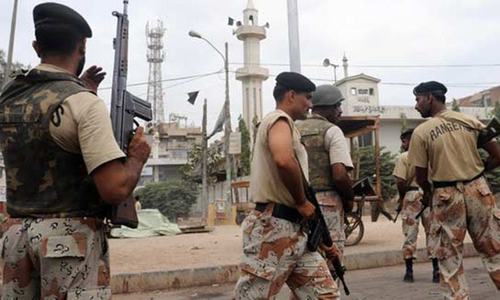
Justice Iftikhar had further said that Rangers told the court that the situation in Karachi was worse than that of Waziristan and that political parties were backing criminal elements operating in the city.
A year later, the apex court had initiated follow-up proceedings to see to what extent the authorities at different levels had implemented its judgement and issued several orders during the lengthy implementation proceedings over the years.