ATHENS: Kurdish rebels in Turkey have announced a one-month truce after the prime minister, Recep Tayyip Erdogan, made the rare admission that Ankara had mistreated their community. The ceasefire follows a wave of attacks on Aegean tourist resorts and military targets. Mr Erdogan, visiting the Kurdish-dominated south-east, signalled that the government was willing to soften its stance towards the Kurds, saying that it was only with “more democracy” — not repression — that their historic grievances could be resolved.
The separatist Kurdistan Workers’ Party (PKK) said in Brussels that it had ordered its armed forces to refrain from violence because Mr Erdogan’s conciliatory remarks had “created a positive atmosphere for a resolution”. The ceasefire, which runs from today until Sept 20, would be rescinded only in “self-defence”. “We are not against the state,” the PKK said in a statement. “We are of the opinion of democratising the state and resolving the question together with the democratic state within the framework of Turkey’s unity.”
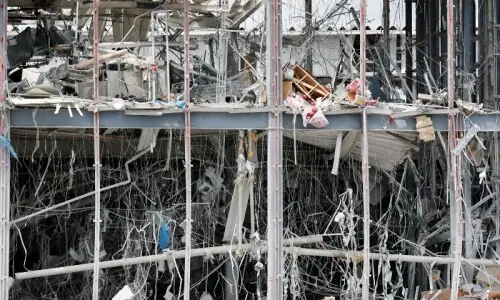
Hundreds of people, including British tourists, have died in bomb attacks allegedly engineered by Kurdish militants since the PKK resumed its violent campaign after a five-year lull.
The announcement came a day after a new pro-Kurdish political organisation, the Democratic Society Movement, urged the rebels to cease fire. The new group, led by a formerly jailed activist, Leyla Zana, said Mr Erdogan’s remarks had raised hopes for an improvement in human rights and living standards in the south-east. Although the one-month ceasefire fell short of the indefinite one Ms Zana had hoped for, it offered a window of “considerable opportunity” for further conciliation between the two sides, analysts said. Kurdish moderates and Turkish intellectuals hope it will enable Mr Erdogan to tackle the thorny issue of granting amnesty to about 5,000 rebels holed up in the mountains.
Until recently, Kurds, who comprise a fifth of Turkey’s 70 million population, had been treated with near total disdain by successive governments, with Turkish officials referring to them as “mountain Turks”. Past unilateral ceasefires have been similarly dismissed, with Turkey saying it would maintain its military drive against the “terrorists” until they surrendered or were killed. About 37,000 people have been killed since the insurrection began in 1984.
Now, however, with Ankara keen not to stall European Union membership talks due to begin on October 3, Mr Erdogan’s Islamic-leaning government is under mounting pressure to solve the conflict peacefully. —Dawn/Inter-Press Service