‘Nobody knows’ how much Lebanese pound could slump


 1
1
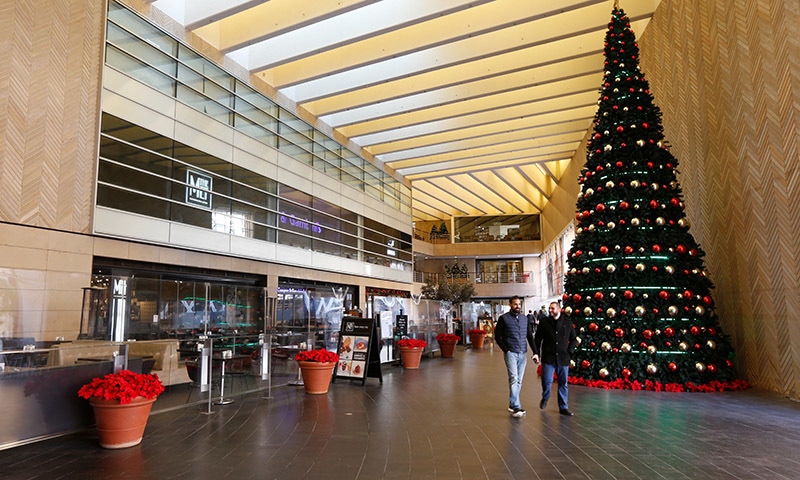

BEIRUT: Lebanon’s central bank governor said on Thursday “nobody knows” how much more the cost of dollars could rise on the black market as a dire crisis piles pressure on a 22-year-old currency peg.
Deep in political turmoil, Lebanon is grappling with its worst economic crisis in decades and battered confidence in its banking system.
The risk of devaluation has risen in a country with one of the world’s biggest foreign debt burdens.
The Lebanese pound has weakened by more than 30 per cent on the parallel market, now the main source of cash. Banks have imposed tight controls, and the hard currency squeeze has driven importers to hike prices.
“We hope the country itself will improve so that the economy can improve,” Central Bank Governor Riad Salameh told reporters after a meeting with parliament’s finance and budget committee on Thursday. When asked how much higher the cost of dollars would rise, he said “nobody knows”. He did not elaborate.
A Banque du Liban (BDL) spokesperson said Salameh’s comments did not indicate any change in the official pegged rate and the central bank’s policy remained to preserve it.
The remark “came in response to a question about the rate at exchange dealers specifically.” Salameh has ruled out a break in the peg, which fixes the pound at 1,507.5 to the dollar. He has pledged repeatedly to maintain it.
Last month, Salameh said the central bank had the ability to underpin the pound’s stability.
He also said it would not go to exchange dealers to give them dollars to keep the official rate.
Street exchange dealers were offering dollars at above 2,000 Lebanese pounds in recent days.
Banks, still dealing at the official rate, have blocked nearly all transfers abroad and curbed dollar withdrawals — including limits of $200 a week.
The head of banking association has called the controls “a fence to protect the system” until things return to normal.
Lebanon urgently needs a new government to pull it out of the long-brewing crisis. Foreign donors say they will only help after there is a cabinet that can enact reforms.
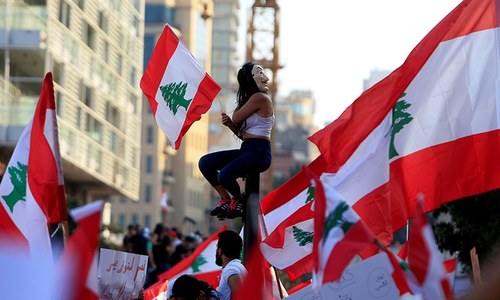
Politicians have feuded over the next cabinet since Saad al-Hariri quit as prime minister in late October under pressure from huge protests against the ruling elite.
Hassan Diab, a former education minister, must now try to agree a government after he was named prime minister last week with the backing of Iran-backed Hezbollah and its allies.
Published in Dawn, December 27th, 2019