KP awaits instructions to exclude families from Sehat Sahulat Programme

PESHAWAR: The Khyber Pakhtunkhwa government is awaiting instructions to strike off names of families from Sehat Sahulat Programme after federal government deleted 820,000 beneficiaries from Benazir Income Support Programme.
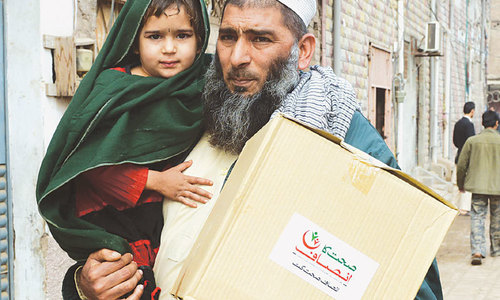
The SSP has issued Sehat Insaf cards to 2.2 million families on the basis of BISP’s data, enabling them to get free health services at the designated hospitals under which 200,000 people have been treated so far.
The doctors said that more than 15 per cent beneficiaries of the programme were not poor but they received free of charge facilities owing to their eligibility in accordance with the BISP’s survey conducted in 2010-11 to determine poverty among population.
They said that the families received cash from the government but also stood eligible for free treatment at the hospitals when SSP was launched by the provincial government to provide free hospitalisation services to the poor population in 2016.
Sources say well-off people also benefit from the scheme
The doctors at the Peshawar-based teaching hospitals that received 50 per cent of the total SSP’s patients said that at least 15 per cent beneficiaries of the progarmme did not deserve. The forms had been distributed by the lawmakers of ruling party on considerations other than helping poor.
According to the data, the SSP began registration of a family with 16.17 proxy means testing (PMT) score (one dollar income per day) for free treatment in 2016 and subsequently picked up people with 32.5 or less score when the programme was extended to 69 per cent population.
Sources in hospitals said they had seen well-off people using SICs but it was not their domain to investigate their economic conditions.
They said that they were supposed to treat anyone referred to them by the people concerned.
According to the data, 60 per cent population earned $2 daily in the country on daily basis.
The survey, meant to identify poor families, was flawed prompting the provincial government to request the federal government for providing it access to Nadra’s database so that the programme could be made more effectives and plug the loopholes and address the complaints of the patients, but to no avail.
As the government is set to expend the programme to the whole province including tribal districts with free health coverage to the all population (about 7.3million families), the demand for its linkage with Nadra has become more important after revelation that rich people have been registered in BISP.
SSP’s connection with Nadra will ensure better monitoring of the services being received by beneficiaries at the hospitals. The programme, under which Rs5 billion has been incurred so far, is likely to get more than Rs10 billion free in-patients services for all.
The new enhanced package by the Khyber Pakhtunkhwa makes the card recipients entitled to get financial assistance of 1080,000 for treatment every year.
The health department also wants mobile phone numbers of all the subscribers from the federal government for getting feedback regarding the services they get at the hospitals.
The government is awaiting instructions to remove names from the SSP list. Sources in health department said that they would remove names of the beneficiaries after instruction from the federal government as it said that people, who didn’t deserve, received financial support under BISP.
Published in Dawn, December 27th, 2019