SBP allows $10,000 advance payment for raw material imports


 2
2


KARACHI: The State Bank of Pakistan (SBP) on Tuesday allowed advance payments of up to $10,000 or equivalent per invoice on behalf of manufacturing concerns for import of raw material and spare parts for their own use only.
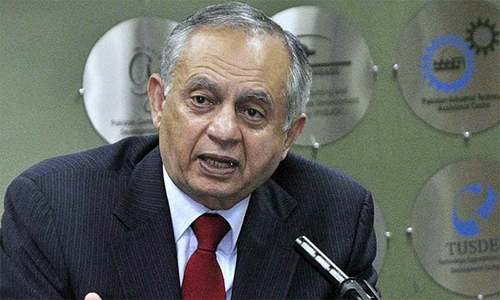
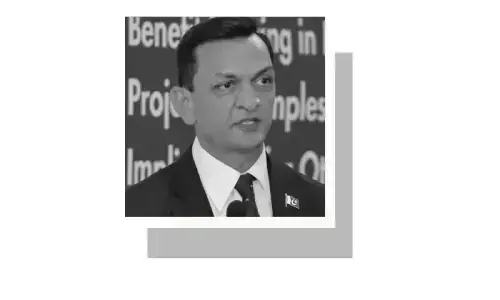
Speaking at a press briefing on Tuesday, SBP Governor Dr Reza Baqir said important decisions have been taken to improve economy particularly following the exchange rate stability and ease of doing business improvements.
He said “prior permission of Foreign Exchange Operations Department (FEOD), SBP-Banking Services Corporation, is required from foreign exchange perspective, by the firms or companies in Pakistan, intending to acquire any type of service in Pakistan.
“But this restriction has been removed,” he said while adding that such services can be acquired from abroad without prior permission of FEOD, if total value, of a specific service to be acquired from abroad, does not exceed $10,000,” he said.
He said these restrictions were imposed in July 2018 due to poor foreign exchange reserves and unstable exchange rate regime.
Move comes after exchange rate stability and improvements in ease of doing business
“We are going [in a] phase-wise manner to ease doing business in Pakistan. We will increase the size of advance payments for larger manufacturers after experiencing the current decisions which are meant for small and medium enterprises,” said the governor.
He said we were in difficult situation regarding the exchange rate regime but it has now changed which is the reason why two important decisions on advance payments for raw materials and services have been taken.
The SBP will increase financing limit under Export Financing Scheme (EFS) and Long-Term Financing Scheme (LTFS). The limit will be increased by Rs100 billion.
He said most of the developed countries progressed with economic sustainability as they relied on exports while adding that short-term financing under EFS is three per cent while long-term financing under LTFS is 5pc for textile and 6pc for other sectors. The SBP pays the difference from these rates to market rates.
He said that in 2018, loans expanded by 25pc due to these schemes while it expanded by 50pc in 2019. He said under the LTFS, more sectors would be facilitated with the low interest rate.
“All these steps taken are in full compliance with the reforms suggested by the International Monetary Fund (IMF),” he said while adding that this is the first step taken for ease of doing business.
In reply to the question that high interest rates are damaging the economy; he said the core purpose of SBP’s Monetary Policy Committee is to reduce inflation. He said the interest rate is used to bring the inflation which is high due to previous imbalances.
He said that despite difficult decisions taken under reforms suggested by the IMF, the economy is still expanding; there is no sign of negative growth.
“We need to change our orientation from inwards to outwards,” he added while pointing out that inflows have increased compared to outflows which improved the net foreign exchange reserves of the country.
He said along with exports, some other sectors are also showing signs of improvement. As we are taking steps towards ease of doing business, we are trying to overcome the hardest time, he added.
Answering a question, he said the impact of $10,000 allowed for advance payments is manageable while the amount can be increased after review.
He said the foreign direct investment numbers have not shown the expected growth due to sentiments about the country and economy. However, the sentiments are changing due to stability in exchange rate regime and institutional improvement, the SBP is not financing the government which is an institutional improvement, he added.
He negated the impression that foreign exchange reserves of the country are increasing due to borrowing from foreign sources.
In response to another question that exporters are in difficulties due to non-payment of refunds and bonds issued by the government for exporters are not acceptable to banks, he said no bond will be issued for refunds.
“Refunds will be refund instantly,” he said. The textile millers recently said their refund of Rs90bn was stuck up with the government for last three months creating serious problem to carry on their day-to-day business.
He said not only the external side has improved but the fiscal deficit has also reduced. Foreign investors are buying treasury bills but the domestic investors — mostly banks — are buying most of government debt papers, he added.
Published in Dawn, November 13th, 2019