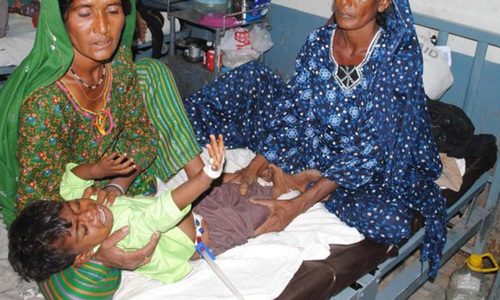
Pneumonia epidemic is deadliest child killer, say aid groups


PARIS: Pneumonia is the world’s deadliest child killer, with a “forgotten epidemic” claiming one young life every 39 seconds, international health and children’s agencies warned on Tuesday.
The disease is preventable but still kills more children — 800,000 under the age of five last year — than any other infection, they said in a statement to mark World Pneumonia Day.
“Every day, nearly 2,200 children under the age of five die from pneumonia, a curable and mostly preventable disease,” Henrietta Fore, Executive Director of Unicef, said in a joint statement.
“Strong global commitment and increased investments are critical to the fight against this disease... Only through cost-effective protective, preventative and treatment interventions delivered to where children are will we be able to truly save millions of lives.”
The numbers make grim reading and compare with 437,000 under-fives dying last year due to diarrhoea and 272,000 to malaria.
Five countries accounted for more than half of the child pneumonia deaths -- Nigeria with 162,000, India 127,000, Pakistan 58,000, the Democratic Republic of Congo 40,000 and Ethiopia 32,000.
Pneumonia is caused by bacteria, viruses or fungi, and leaves children fighting for breath as their lungs fill with pus and fluid.
Children with weakened immune systems and those living in areas with high levels of air pollution and unsafe water are most at risk.
The disease can be prevented with vaccines and is easily treated with low-cost antibiotics if properly diagnosed.
Published in Dawn, November 13th, 2019