Inflation clocks in at 11pc in October



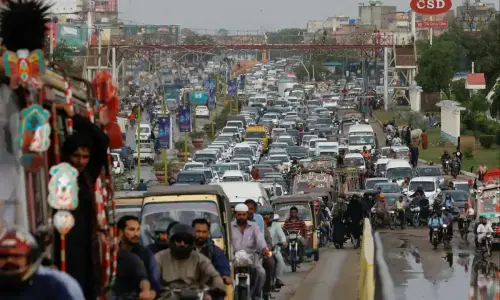
ISLAMABAD: Prices of seasonal essential goods continued to rise as inflation clocked in at 11 per cent in October 2019 from a year ago, reported the Pakistan Bureau of Statistics (PBS) on Wednesday.
Inflation, measured through the Consumer Price Index (CPI), edged up by 1.8pc over the previous month after the PBS revised its calculation methodology by setting the new base year 2015-16 instead of the previous 2007-08 financial year.
The change in base year means the economy’s price levels in FY16 will now be the base against which all existing prices will be calculated for the CPI.
Based on the new base year, October inflation came in at 11.04pc, versus 11.4pc in the previous month.
Going by the old base year of FY08 that was being used until three months ago, the key inflation index comes in at 11.08pc for October, showing a 1pc increase over the month of September.
As per the new base year, the lowest CPI was recorded in July at 8.4pc.
The data shows the urban CPI covers 35 cities and 356 consumer items, while rural CPI tracks 27 rural centres and 244 items. The former grew by 10.9pc year-on-year in October whereas the latter jumped by 11.3pc.
The International Monetary Fund has estimated that Pakistan’s inflation may escalate up to 13pc, but the government’s estimate is around 11pc, which has already been crossed in the outgoing month.
The core inflation rate in urban areas was 7.8pc in October according to the new methodology as it dipped from 8.4pc. The core inflation rate in rural areas was 8.6pc in October while it was 8.8pc in the previous month. The central bank determines the key policy rate (which currently stands at 13.25pc) on the basis of the core inflation rate.
Further analysis shows that the food inflation in urban areas rose by 13.7pc in October on a yearly basis and 1.4pc month-wise. In rural areas, food inflation rose 14.6pc on a yearly and 2.6pc on a monthly basis.
Similarly, non-food inflation in urban centres was recorded at 9.4pc year-on-year while it was 8.7pc in rural areas.
In urban areas, the food items which saw their price levels go up included: tomatoes(34.97pc), eggs (19.74pc), fresh vegetables(17.69pc), potatoes(10.08pc), onions(4.98pc), beans(2.53pc), fish(2pc), dry fruits(1.86pc), milk powder (1.79pc), besan(1.28pc), wheat(1.22pc), meat(1.17pc), pulse masoor(1.04pc), and Gur(1pc).
The items that declined in urban were sugar(1.37pc), chicken (18.17pc) and fresh fruits(1.39pc).
In the rural areas, the items that witnessed increase in inflation included fresh vegetables(36.73pc), tomatoes(27.07pc), eggs(15.76pc), potatoes(9.62pc), onions(3.63pc), pulse mash(3.13pc), fish(2.69pc), beans(2.6pc), gur(2.21pc), pulse gram(2.17pc), dry fruits(1.55pc), milk powder(1.35pc), wheat(1.35pc), vegetable ghee(1.19pc), tea(1.15pc), wheat flour(1.13pc) and rice(1.03pc). In rural areas, the prices of chicken fell 14.14pc, sugar 1.47pc and fresh fruits 1.06pc.
PM’s meeting on essential items
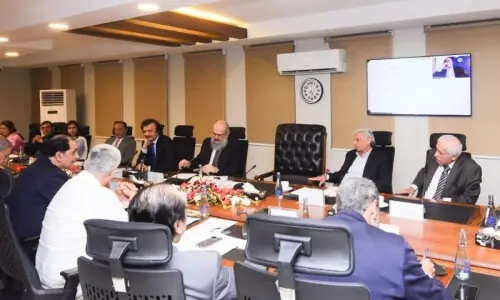
Disturbed by the seasonal fluctuations in prices of essential goods, Prime Minister Imran Khan on Wednesday held a detailed meeting with his economic team to devise ways for controlling their prices, particularly those of flour, ghee and sugar, and took some important decisions.
Mr Khan asked for establishment of a ‘Special Cell’ in the Ministry of National Food Security with an immediate effect. The cell will take timely decisions about assessment of demand and supply of essential items.
On the issue of continued rise in flour price, the chief secretaries, however, informed the premier that there was no complaint about wheat shortage in the country after supply of commodity from Pasco storage houses.
Apparently, the premier was unhappy with the explanations from chief secretaries and asked for taking all-out measures to control the prices of essential edible items. He asked for checking on smuggling of wheat, flour and fine flour from the country.
He said more steps to be taken for checking hoarding and profiteering. The premier directed use of new technology to reduce difference in prices in wholesale and retail markets.
The PM asked for reduction in ghee prices after the postponement of axle load policy. It was also decided that government would provide a place at tehsil level for cultivators to directly sell their commodities without any fee and expenditures.
Mr Khan sought a weekly report on essential items at district and tehsil levels so that real prices of the commodities could be checked. It was also decided to use the chain of utility stores for providing essential items to consumers.
Islamabad Chief Commissioner briefed the meeting about launch of ‘Durust Daam’, a mobile app, in the capital to control price hike and difference of rates in the markets. It was decided to introduce the same system in Abbottabad, Peshawar, Mardan and Dera Ismail Khan, Rawalpindi, Multan and Lahore with an immediate effect.
Published in Dawn, November 7th, 2019