CM plans host of reforms to revamp Sindh police

KARACHI: Chief Minister Syed Murad Ali Shah on Thursday decided to introduce police reforms in Sindh, including upgrade of pay scales at par with that of the Punjab police, setting up model police stations with new vehicles and a “well-behaved” police force.
The other reforms include the establishment of a permanent selection centre where recruitment would continue round the year to fill positions wherever they emerged with local people.
Besides police Inspector General Dr Kaleem Imam, the chief minister also asked Chief Secretary Syed Mumtaz Ali Shah to prepare working papers for cabinet approval, including recruitment of transgender persons to bring them in the mainstream.
The CM took these decisions while presiding over a meeting on police matters held here at Chief Minister House. The meeting was also attended by home secretary Kazi Kabir, additional IG (training) Aftab Pathan, AIG Karachi Ghulam Nabi Memon and finance secretary Hassan Naqvi.
Seeks working papers to recruit and mainstream transgender persons
He recalled that he had uplifted the morale of policemen by strengthening them with the latest weapons, gadgets and incentives so that they performed with honesty and dedication. “I want to bring the transgenders to the mainstream and committed to educate, train and make them useful members of society,” he said and urged the nongovernmental and other organisations working for the welfare of transgenders to educate and bring them in government service. He asked the chief secretary to make necessary amendments in the rules so that transgender persons could compete even in open competition for government service.
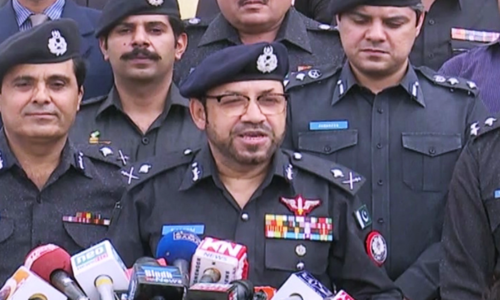
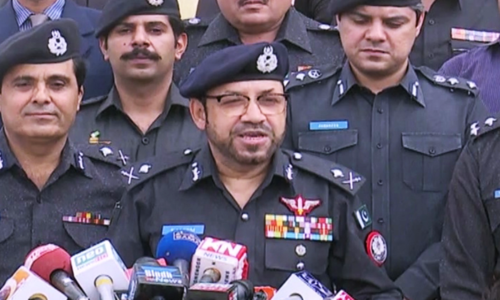
Earlier, IGP Kaleem Imam briefed the chief minister on different proposal for introducing reforms from top to bottom in the police department while AIG Ghulam Nabi Memon told the chief minister that there were 108 police stations in the city and most of them were redundant as they had been established on storm-water drains and there was no need to continue them.
Model police stations
The CM said two police stations located within the same periphery of the city should be merged together and declared model police station. He said the first model police station be established by amalgamation of the Boating Basin and Clifton police stations, where a senior SHO with DDO powers would be given a revolving fund of Rs50,000 to meet the day-to-day expenditures. He directed the AIG to post a well-reputed, well-behaved, and well-trained police force.
“Every morning they will have to do drill to remain alert and smart,” he said and added that the model police station would be set up in a police station owned by the police department.
On highlighting the need for new vehicles for a model police station by the Karachi police chief, the CM said if the model police station experience appeared successful, he would change other police stations into model police stations.
The IGP drew the attention of the CM to some 2,000 policemen who had either been maimed or blinded in the line of the duty. Mr Shah directed him to prepare a working paper for the cabinet to create a separate cadre of Ghazis on the pattern of the Shaheed cadre. “The government will give them ample amounts to lead a respectable life with their families and will also give them a job in the police department from where they could meet the expenditures of their bread and butter,” he said and added that policemen who lost their physical capabilities in the line of duty were the responsibility of the government and the department, which would look after them and their families.
The IGP also told the CM that constables, head constables and ASIs were in grades BS-5, BS-7 and BS-9, respectively, in Sindh while police of the same designations/cadres were in grades BS-7, Bs-9 and BS-11 in Punjab. The chief minister approved the upgrade of policemen in Sindh and bringing them at par with the policemen of Punjab.
He directed the IGP to prepare a summary and send it to him for formal approval. “Why should our policemen be of lower cadre than Punjab’s?” he said, adding that he hoped that with the upgrade they would be working with dedication and devotion.
The IGP also told him that every year around 8,000 to 10,000 policemen retired from service and as such there were 30,000 vacant positions all over Sindh. On this the chief minister directed him to establish a permanent selection centre where recruitment should continue round the year. The recruitment must be of locals wherever positions emerged.
Jamshoro range
On highlighting the need for creating another police range, the chief minister approved the proposal that the Jamshoro police range include Jamshoro, Dadu, Thatta and Sujawal districts and asked the IGP to float a summary for the cabinet.
The CM pointed out that a large number of police guards had been given to unauthorised persons. He directed the home secretary to notify a threat assessment committee for giving police guards to “genuine” people. Mr Shah directed the IGP to allow guards to authorised persons if they paid their salaries, otherwise guards would be allowed only to the deserving people.
The IGP during the discussion told the CM that under the new police law introduced in the province, the IGP happened to be secretary to the police department. At this the chief minister directed the IGP to prepare a working paper and bring it in the next cabinet meeting.
Published in Dawn, October 4th, 2019