ISLAMABAD: The Federal Drug Surveillance Laboratory (FDSL), will be made operational within the next two months so it can function as a drug-testing laboratory for the Drug Regulatory Authority of Pakistan (Drap).
The FDSL is the only laboratory in the country with the hope of becoming pre-qualified by the World Health Organisation (WHO), but it has not been established in 13 years.
It is also the subject of a number of objections raised by the Auditor General of Pakistan in a special audit report that it recommends be addressed.
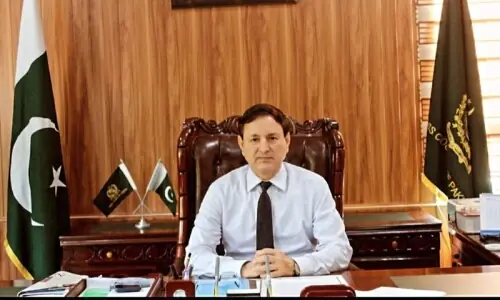
However, National Health Services (NHS) Secretary Dr Allah Bakhsh Malik told Dawn that the lab will be made operational within the next two months.
“The ministry has also established an inquiry committee to ascertain why the lab project was delayed. I hope that the report of the inquiry committee will be completed in the next two weeks,” he said.
The laboratory, which is supposed to test drugs for Drap, has not been established 13 years after it was approved
A credible drug testing laboratory is the most important requirement for drug quality control. New medicines are launched in the market frequently, due to which a laboratory is required to ensure the medicine’s quality, safety and effectiveness.
An officer from the NHS ministry who asked not to be named said the PC-I for the FDSL was approved on May 13, 2006, by the Central Development Working Party (CDWP) with a cost of Rs156.3 million and a completion date at the end of 2007.
“The completion date was extended from time to time. In 2011, it was decided to shift the FDSL to the first floor [which has an area of 12,498 square feet] of the National Control Laboratory (NCL), and the Federal Medical and Dental College (FMDC) was established in the FDSL building, which has an area of 32,942sq ft,” he said.
The officer said this left both laboratories facing a shortage of space for the experiments and research they had to carry out.
“Equipment that had already been purchased could not be used as it had to be installed in the purpose-built lab. In 2018, the FMDC was moved to another building but the FDSL to date has not been set up,” he said.
The audit report also found negligence in the establishment of the lab.
Available with Dawn, the report states that the FDSL under Drap was approved at a total cost of Rs156.3m by the CDWP at a meeting held on May 13, 2006. Drap’s management incurred Rs151.7m in costs under the project until June 2014, but the project was not completed.
It said lab equipment was moved to another building where it was not used for its intended purpose, and the warranty period for this equipment has expired.
It added: “The expenditure of Rs30.649 million has been incurred on establishment cost without output and outcome. The chemicals and consumables purchased for laboratory have expired. No staff is available to run the laboratory.”
The report said the non-functional laboratory resulted in a waste of public funds and the public was deprived of the benefits of the laboratory.
“Audit is also of the view that general public and public exchequer had to sustain loss while the management neglected the non-functioning of the laboratory. The management (Drap) replied that the project could not be completed within time frame due to financial crunch in the country which was beyond the control of the management of the laboratory. However, the competent forum allowed extension up to 30th June 2014,” it said.
The report said the reply was not acceptable, adding that a departmental accounts committee (DAC) meeting in January 2016 directed the management to update the audit with correspondence between the NHS ministry and the Cabinet Division regarding the vacation of the FDSL building.
The DAC also order the constitution of an inquiry committee headed by the NHS joint secretary to look into why the lab was not yet functional and the way forward.
“The inquiry committee shall complete the inquiry within two weeks. However, no response has been received to date. Audit recommends that responsibility should be fixed for non-achievement of objectives of the project,” it said
Dr Malik said the inquiry committee would finalise the report within the next two weeks and it will be shared with the press.
Published in Dawn, October 1st, 2019