34
34


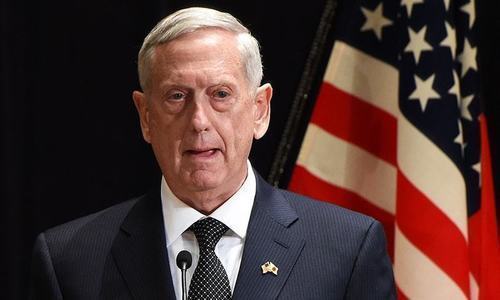
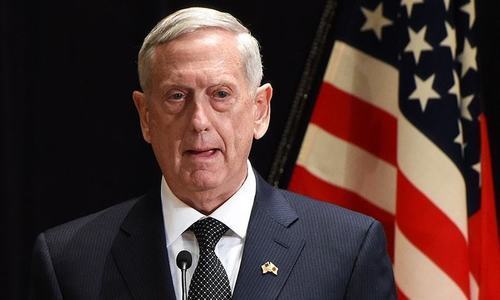
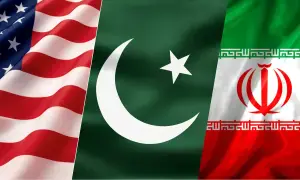
WASHINGTON: Their common interests demand that the United States and Pakistan maintain a cautious relationship with modest expectations, argues former US secretary of defence James Mattis.
In his autobiography Call Sign Chaos, President Trump’s first defence chief notes that Pakistan’s complicated relations with India force Islamabad to seek a friendly government in Kabul.
Mr Mattis, a much accomplished general from the Marines Corps, was inducted into the Trump cabinet with great expectations but he resigned in January 2019 after differences with the president over Afghanistan and other issues.
The general, who has served in Afghanistan and commanded the US Central Command, opposes a rapid US withdrawal from Afghanistan. His book hit the stands on Tuesday afternoon.
Former defence secretary says both sides should have modest expectations from each other
“Ultimately, it’s in our common interest that we maintain a cautious, mindful relationship, with modest expectations of collaboration,” Mr Mattis wrote while reviewing US relations with Pakistan.
“We could manage our problems with Pakistan, but our divisions were too deep, and trust too shallow, to resolve them. And that’s the state of our relationship to this day.”
On Tuesday, Gen Mattis also participated in a group discussion at the US Council on Foreign Relations, Washington, where the moderator asked him why he described Pakistan as “the most dangerous country” in his book.
“The radicalisation of their society. By the way that’s also the view of members of the Pakistan military,” he said. “They realise what they have got going on there. They recognise it.” He said the relationship between the US and Pakistan was “very twisted”.
“When you take the radicalisation of a society and you add to it the fastest growing nuclear arsenal, I think in the world, you see why … we need to focus right now on arms control and non-proliferation efforts,” he said. “This is a much worse problem I think than anyone writing about today.”
At several places in the book, Gen Mattis highlighted old ties between the US and Pakistani militaries, but expressed very low opinion about the country’s political leadership.
“Pakistan was a country born with no affection for itself, and there was an active self-destructive streak in its political culture,” he wrote. “They don’t have leaders who care about their future.”
Gen Mattis claimed that Pakistan “views all geopolitics through the prism of its hostility toward India” and that has also shaped its policy on Afghanistan as Islamabad “wanted a friendly government in Kabul that was resistant to Indian influence”.
The former defence chief also noted that the Pakistan military had lost more their troops fighting terrorists on their side of the border than the Nato coalition had lost in Afghanistan.
“Yet, they thought they could or at least manipulate the terrorists. But, once planted, terrorism was growing in ways that no one — not even Pakistan’s secret service could predict or control,” he noted.
Published in Dawn, September 5th, 2019