Security tightened in Assam before ‘citizens list’ release
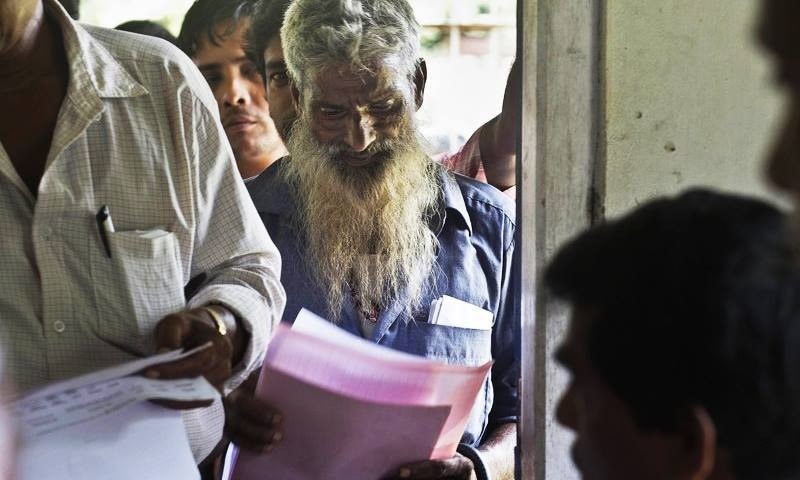

GUWAHATI: Security was tightened on Friday in the Indian state of Assam for the release of a citizens’ list that could potentially lead to several million people becoming stateless, most of them Muslims, in a process the government wants to replicate nationwide.
Those left off the National Register of Citizens (NRC), due to be published on Saturday, face losing their citizenship, being put indefinitely into camps or deported — to the alarm of UN rights experts and activists.
Authorities in Assam in north-eastern India, for decades a hotbed of inter-religious and ethnic tensions, have brought in 17,000 additional security personnel with gatherings banned in soma areas and “cyber units” scanning social media.
Assam, an isolated state of 33 million, has long seen large influxes from elsewhere including during British colonial rule and around the 1971 war of independence in neighbouring Bangladesh.
Pressure for a lasting solution has been growing for decades from those who see themselves as genuine Assamese. Sporadic violence has included the massacre of around 2,000 people in 1983.
Critics of Prime Minister Narendra Modi’s Hindu nationalist Bharatiya Janata Party (BJP), which also runs Assam, say the NRC process reflects its aim to serve only its co-religionists.
In January India’s lower house passed legislation that stands to grant citizenship to people who moved to India from Bangladesh, Pakistan and Afghanistan as recently as six years ago — but not if they are Muslim.
Home Minister Amit Shah, Modi’s right-hand-man, has called for the ejection of “termites” and said before the BJP’s thumping re-election victory in May that it would “run a countrywide campaign to send back the infiltrators”.
Only those who can demonstrate that they or their forebears were in India before 1971 can be included in the NRC.
But navigating the complex process is a huge challenge for many people in a poor region where illiteracy is rife and where many lack documentation.
The roughly two million people who are expected to be left off the final NRC register — although estimates vary — will have 120 days to appeal at special Foreigners Tribunals, which the government says are being expanded.
But critics say that tribunal members can be underqualified and are subject to “performance” targets, and that the entire process has been riddled with inconsistencies and errors.
Published in Dawn, August 31st, 2019