PM launches health plan for people with disabilities


ISLAMABAD: In line with his vision of universal health coverage, Prime Minister Imran Khan on Saturday launched Sehat Sahulat Programme for persons with disabilities and their families in Pakistan and said his government’s vision was based on the principles of lifting the conditions of the downtrodden and weaker segments of society.
“I have seen that whenever a poor person gets sick, his entire household is destroyed as most people don’t have the money to pay for the cost of treatment,” said Mr Khan at the launching ceremony of ‘Sehat Insaf Cards’ organised at the auditorium of PM Office.
“I realised that paying for cancer is so difficult for rich people that I can’t even imagine how hard it must be for people who don’t have money. We want to cover everyone and provide health insurance to all,” he said.
Ehsaas strategy with five priority goals to be released soon, says BISP head
Mr Khan said one leader had vowed to make this country Asian Tiger. “One should ask him if Pakistan was created in the name of Islam or to be developed into Asian Tiger?” he said. “We have to make Pakistan an Islamic welfare state that is based on Riyasat-i-Madina. I keep repeating this because I want everyone to know what it was. It was a modern state with humanity and justice as its founding principles.”
At the start of every cabinet meeting, the premier said, he asked all the ministers to tell him what their ministry had done to improve the lives of the people.
Special Assistant to the PM on Health Dr Zafar Mirza said that it was the first-ever initiative aimed at the empowerment, mainstreaming and well-being of the persons with disabilities by the government. “Through health cards, disabled individuals and their registered families will also be provided with similar benefits, which are being provided to other families,” he said.
He said this joint collaboration between the Ministry of National Health Services and Ehsaas Programme would be an example for all other public sector initiatives to work together and synergize their efforts to benefit the people.
Dr Zafar said the programme would be a major step towards poverty alleviation, as expensive treatment for all major diseases was covered in it. This would protect vulnerable families from economic shocks, he added.
He said through this social health protection initiative all persons with disabilities and their families would be provided with free-of-cost health insurance to secure indoor health care services worth Rs720,000 from empanelled hospitals through a very transparent and computerised mechanism.
According to him, the treatment and services being offered under Sehat Insaf Card include open heart surgery, insertion of stents, management of cancer, neurosurgical procures, burn management, accident management, dialysis, intensive care management, deliveries, C-section and other medical / surgical procedures. The programme will also provide Rs1,000 travel cost to its beneficiaries at the time of their discharge from hospital. There is provision of burial support as Rs10,000 per death (if occurs at hospital). There is facility of inter-provincial / inter-district portability for availing free-of-cost services from any empanelled hospital in Pakistan.
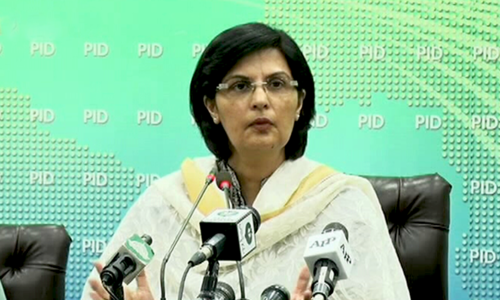
The head of Benazir Income Support Programme (BISP), Dr Sania Nishtar, announced Ehsaas programme’s five priority goals that were part of the Ehsaas strategy. They included safety net for at least 10 million families, livelihood opportunities for five million individuals (50pc women); financial access to healthcare through Insaf card for 10 million families; scholarships and education incentives for more than five million students (more than 50pc girls); and through the Kifalat programme, financial inclusion and access to mobile phones for six million women and 500 digital hubs for them to access internet, she added.
She said the goals would be further explained in the Ehsaas strategy that would be released soon.
Published in Dawn, August 18th, 2019