NHS ministry asked to mobilise teams for dengue prevention


 1
1


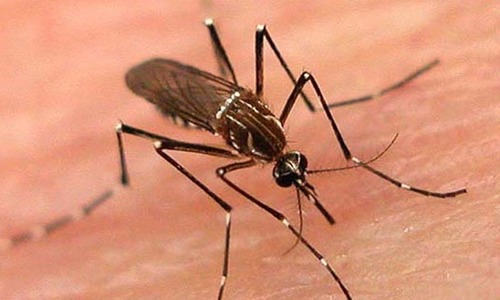
ISLAMABAD: The capital administration has asked the Ministry of National Health Services (NHS) to mobilise its teams to help take measures to control the spread of dengue.
A meeting on Saturday was attended by all concerned departments in this regard, administration officials said. NHS representatives at the meeting were asked to mobilise their teams and depute them on the capital’s borders, including in Rawat.
NHS teams are working in Tarnol and Bhara Kahu, they said. Since there were no threats regarding the dengue virus, they were asked to focus on Islamabad’s borders. Rawat is currently the focus, as no cases have been reported from anywhere in the capital but this area.
They said NHS teams raise awareness about dengue prevention among the public. They tell people not to let water accumulate, the fumigate the area against dengue larva, to put fish in accumulated water where larva is spotted and test solid waste for traces of larvae.
The administration’s fisheries department was also asked to ensure fish that eat dengue larvae are available. These fish cost between Rs2 and Rs5, and five fish are enough to clear water of larva, they said.
Officials said the administration has also banned keeping tyres in open spaces, water accumulation in open spaces, solid waste disposal in open spaces and sewerage leaks. Assistant commissioners and magistrates have been asked to visit their respective jurisdictions to implement these bans.
Assistant commissioners were also asked to submit daily reports on the imposition of section 144 on tyres, ponds, solid waste disposal and sewerage leaks.
Daily entomology and larvicidal reports will also be shared to better management patients and response.
A memorandum of understanding was signed with the National Information Technology Board for geo-tagging the area where larvae is found or people contract dengue, they said.
Officials added that in the past, people living on the border of Islamabad visited hospitals in Rawalpindi and were therefore shown on the Rawalpindi data instead of Islamabad’s.
The district health officer was asked to keep help from the Punjab Information Technology Board to provide desktop authorisation so Rawalpindi and Islamabad can monitor their border areas together.
Daily community awareness sessions would also be ensured.
Published in Dawn, August 11th, 2019