Russian opposition leader may have been poisoned, says doctor


 3
3


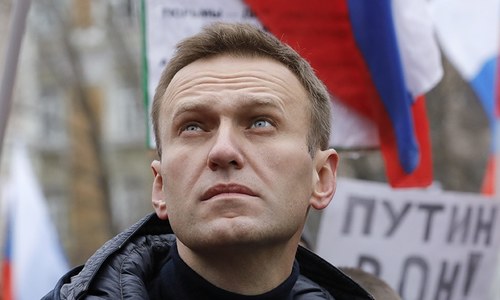
Russian opposition leader Alexei Navalny remained hospitalised for a second day on Monday after his physician said he may have been poisoned.
Details about Navalny's condition were scarce after Navalny was rushed to a hospital on Sunday from a detention facility where he was serving a 30-day sentence for calling an unsanctioned protest. He was arrested several days before a major opposition rally on Saturday that ended with nearly 1,400 people detained.
Tensions were high in Moscow on Monday as dozens of protesters remained in custody and the opposition called for a new rally over the weekend.
Access to Navalny is restricted, and Dr Anastasiya Vasilyeva, who has been Navalny's physician for several years, only managed to see him on Sunday afternoon. Doctors at the hospital initially said that Navalny was taken in with a severe allergy attack but Vasilyeva said that the swelling and the rash on his face could be consistent with chemical poisoning.
At least 21 people including Navalny's supporters and journalists were briefly detained outside the hospital late on Sunday.
Vasilyeva said that hospital officials who previously diagnosed Navalny with an allergic reaction refused to run the necessary tests on him. Vasilyeva said that she would be allowed to visit Navalny again later on Monday.
The source of the allergic reaction or poisoning wasn't immediately clear. But Navalny ally Leonid Volkov on Sunday complained about “anti-sanitary conditions” at the detention facility where he had also been detained before.
Navalny has been the Kremlin's most formidable foe since 2011 when he led a massive wave of protests against President Vladimir Putin and his party. He has since been convicted on two sets of criminal charges, largely regarded as politically motivated, and spent numerous stints in jail for disturbing public order and leading unsanctioned protests.
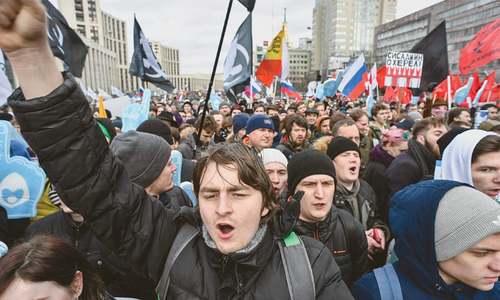
Baton-wielding police on Saturday wrestled with protesters in arguably the largest unsanctioned protest in Russia in a decade. Opposition activists, as well as ordinary Muscovites, took to the street to vent their anger over officials' decision to exclude a dozen independent candidates from the ballot for the upcoming vote for the Moscow city legislature.
More than 1,400 people were taken into custody on Saturday, including several would-be candidates. Two of them, Ilya Yashin and Dmitry Gudkov, face a court hearing later on Monday.