ISLAMABAD: Education in Pakistan largely sharpens the existing divisions, mainly around religious lines. Discriminated against in all respects, the life of non-Muslim students and teachers is miserable.
This was stated in a report titled ‘Education and Inequality’ launched by the Institute of Development Research and Corresponding Capabilities (IDRAC) and Human Rights Commission of Pakistan (HRCP) on Friday.
The report, which was launched at the HRCP office, pointed out that the situation was quite alarming.
“A massive 60pc of the non-Muslim students interviewed as part of this study said they had experienced discrimination or felt they were being discriminated against and disrespected,” reads the report.
It said that similarly 70pc of teachers admitted to having faced discrimination based on their faith. While, as many as 72pc of parents believed their children to be discriminated against in schools and colleges because of their faith-based identity.
Calls for teachers training, legislation to correct situation
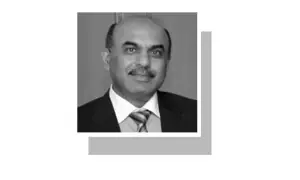
Speaking at the launching ceremony, lead author Amjad Nazeer of IDRAC said during research work for the report, he pointed out that there was need to change mindset and behaviour of Muslim teachers, who had been teaching the minorities students.
“Without changing behaviour of teachers, change in syllabus will be useless,” he said.
He said because of “situational” issues in many schools, like shortage of teachers, students from minorities were left with no other option but to study Islamiyat. However, he said that during his research he did not find any case where such students were forced to take Islamiyat as a compulsory subject.
HRCP member Nasreen Azhar said in Pakistan the environment for minorities was not conducive and the government should pay heed to issues being faced by minorities.
Human rights activist Tahira Abdullah said the Supreme Court in its landmark judgement of 2014 had decided that students from the minorities community could not be forced to study Islamic books in schools. However, she said the judgement was not fully implemented yet.
The participants of the ceremony said Ziaul Haq promoted Jihad and extremism through school and college curriculum, and for making Pakistan a peaceful country, all such material should be removed.
Meanwhile, the report said that in Punjab, from where the data was collected, an alarming 60pc of non-Muslim students experienced discrimination or felt they were being discriminated against.
The report said education and academic environments lacked the characteristics of objectivity, impartiality and critical cum analytical thinking. It said that scientific and empirical principles of thought and inquiry, mainly in the social arena, were almost absent. “Other ethnic, linguistic and cultural identities that are integral part of Pakistan’s composition are rarely acknowledged or respected. Even one’s professional distinction or eminence is subordinated to one’s faith,” the report said, adding that sometimes, Muslim students were found to be confusing ‘the west’ with the local Christians and India with the local Hindus and Sikhs.
The report pointed out that non-Muslims were perceived to be the enemies of Islam by Muslim students and teachers. Ceremonies and festivals of non-Muslim communities are never considered by the academic system.
The report recommended that the policy and purpose of pre-university education needed to be thoroughly revised. The process needs to be instrumentalised to create objective, critical and analytical thinking and understanding in children. It said that scientific and empirical principles of thought and inquiry need to be promoted across all subjects. It also said most importantly, humanist values of respect, equality and empathy need to be instilled and strengthened in young minds.
The report recommended that the notion of non-Muslims as enemies of Islam should be dispelled. It says that the publishing of the National Book Foundation’s and Punjab Textbook Board’s ‘Role of Minorities in the Making of Pakistan’ for the 8th grade was a welcome sign. Similar essays and historical excerpts need to be further incorporated by other provincial textbook boards at different levels.
Published in Dawn, July 27th, 2019