0
0


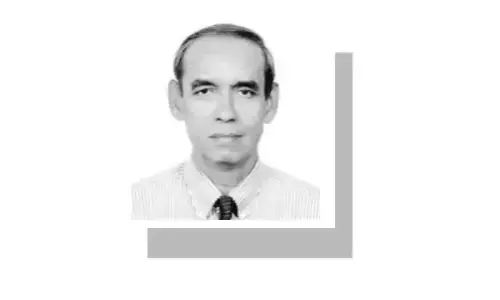
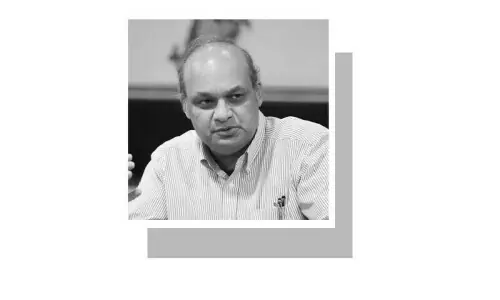
KARACHI: While tracing the history of upheavals in the country with the taking over of dictators, martial laws, tampering with the Constitution, terrorist attacks and crimes against the state along with what has been going on in the provinces all these years right up to now when erstwhile Fata has joined Khyber Pakhtunkhwa, former IG Police, DG FIA and federal secretary Tariq Khosa’s talk on Sunday was based on six points about which he said that they should be at the basis of the national agenda.
He was speaking about ‘Pakistan’s Internal Security and Governance Challenges’ organised by The Roundtable here on Sunday.
His first point was that Pakistan should get over its insecurity complex. “We should use our strategic location to our advantage in the form of trade. We should not use it to fight other peoples’ wars,” he said.
His second point was that the state of Pakistan has faltered to its policies but it must now abandon its alleged support for militant or jihadi groups. “The time for insurgency is over,” he said.
His third point was about rule of law, which guarantees individual rights. He said that there was no need for muzzling of voices. “I am very concerned about this stifling of opinions. We need to build tolerance in order to hear out others. There are laws in place for dealing with rebels, agitators, anarchists, mutineers, etc. There is no need to make them disappear. The kill and dump strategy has been ruthless and it has been the cause of too much hate. Besides, there has been a change in places such as Balochistan where insurgency is no longer in the hands of the sardars but in the hands of the educated youth with whom reconciliation works better. Pakistan cannot be a prison for its citizens,” he said.
His fourth point was about social justice. “There is so much philanthropy in Pakistan and yet we are fighting the battle between the haves and the have-nots,” he said. “Miiltancy has its basis in the haves and the have-nots. Those who are poor join militant organisations as they are offered more there. There is a need for integration, reconciliation,” he added.
Coming to his fifth point, he said that national harmony can be achieved through tolerance, not an enforced rule but by facilitation. “The state has no religion,” he reminded. “Tolerance can take you ahead with various minorities and ethnicities. You need national harmony,” he said.
And this brought him to his sixth point about the salience of institutions. “All institutions need to get together to review the contact between the citizens and the state. We need to strengthen the provinces to strengthen the federation. We need a national security committee, the parliament is to oversee the government, the judiciary is to work in that mandate and national interests are to be given priority for which the segments of the state are to sit together and keep Jinnah’s dream for Pakistan alive,” he said.
Explaining a bit about their initiative, The Roundtable, earlier, Ameena Saiyid OBE, said that there are some 7,000 think tanks all over the world and they just happened to be another one in Karachi. “We thought it was important to create a think tank or advocacy organisation where we could host talks and organise seminars to raise awareness about issues and challenges,” she said.
Published in Dawn, July 22nd, 2019