Two polio cases reported in Africa


GENEVA: Two cases of polio have been reported in the Central African Republic, the World Health Organisation said in a report on Tuesday, the latest setback for global efforts to eradicate the crippling disease.
The cases, reported to the WHO on May 24, were caused by “vaccine-derived” polio rather than the wild type of the virus that still circulates in Pakistan and Afghanistan.
“There is a high risk of transmission of the virus as both cases were among internally displaced persons [in an area] with an estimated population of 8,000,” the report said.
“The two cases had no previous history of vaccination for polio. Vaccination coverage in the affected district is 50pc with insecurity being one of the main obstacles to access.” Latest figures from the Global Polio Eradication Initiative show there have been 10 vaccine-derived polio cases this year: eight in Nigeria, one in Somalia and one in Democratic Republic of Congo. Pakistan and Afghanistan have reported 24 cases of the wild type.
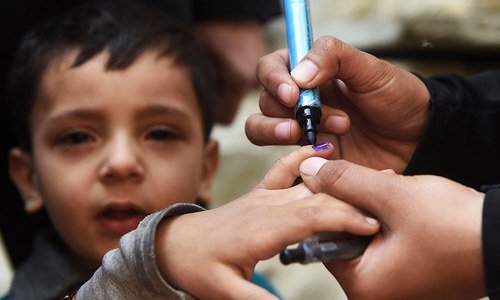
Polio is a virus that spreads in areas with poor sanitation. It attacks the nervous system and can cause irreversible paralysis within hours of infection. Children under five are the most vulnerable, but polio can be prevented with vaccination.
Vaccine-derived cases tend to occur in places with low vaccine coverage and poor sanitation as people who have been vaccinated excrete the virus, putting those who have not been vaccinated at risk of catching it.
The risk of vaccine-derived polio cases can be avoided by switching from using live oral polio vaccines (OPV) — which are highly effective, cheap and easy to deliver but contain live virus — to “inactivated” vaccines (IPV), which are not effective for fighting the wild type but contain no live virus.
Published in Dawn, May 29th, 2019