4
4


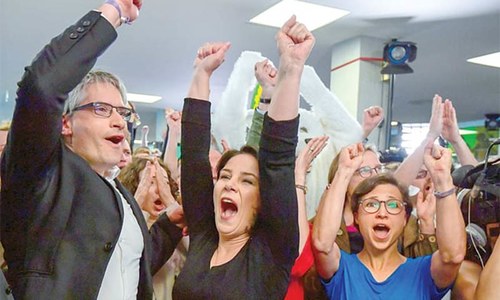
BRUSSELS: The tussle for top EU jobs got under way on Monday after European Parliament elections delivered a fragmented result, with gains for eurosceptic and green parties as the traditional mainstream groups took a hit.
The main centre-right and centre-left groups lost their combined majority in the 751-seat parliament in the face of a challenge by eurosceptic and nationalist forces of Marine Le Pen, Matteo Salvini and Nigel Farage — although the populist wave was less than some had predicted.
There were big wins for the Greens, who posted double digit scores across Europe’s biggest countries, and the Liberals, with both parties likely to play a major role in any future parliamentary coalition.
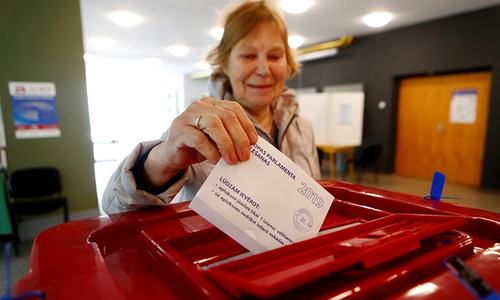
Each previous EU election since the first in 1979 has seen turnout fall, but figures from across the 28-nation bloc were at a 20-year high of 51 per cent, suggesting this year’s culture clash mobilised both populists and those who oppose them.
Boosted by French President Emmanuel Macron’s Renaissance Movement, the Liberal ALDE group will finish with more than 100 seats and is expected to push hard for Margrethe Vestager to win the plum European Commission presidency.
Britain will send a large contingent of eurosceptic MEPs to a parliament they want to leave in a few months, after Farage’s single-issue Brexit Party trounced mainstream parties, while Salvini’s League was Italy’s biggest party and Le Pen’s National Rally squeaked ahead of Macron.
Holger Schmieding, chief economist at Berenberg bank, said the vote had left Europe “slightly more fragmented and polarised”, and underscored a shift from the two main groups to the liberals and greens, partly owing to the rise of the populist right.
“To simplify a complex picture: whereas some voters care a lot about migration, many others see climate change as the key issue,” Schmieding said.
As the dust settled on the vote, attention turned to landing top EU roles for the next five years: presidencies of the commission and the European Council, the speaker of parliament, the high representative for foreign policy and head of the European Central Bank.
These jobs will be picked by the national leaders of EU governments, with the first formal clash set for Tuesday, when they will meet for a summit dinner in Brussels.
Macron fired the starting pistol on the haggling on Monday as he announced a series of one-on-one meetings with other leaders before the summit, notably Spanish Prime Minister Pedro Sanchez — one of Sunday’s big winners — and German Chancellor Angela Merkel.
Merkel backs Manfred Weber, the lead candidate of the centre-right European People’s Party (EPP), which suffered significant losses but remained parliament’s biggest bloc with 180 seats.
But Macron is set against Weber — a longstanding MEP seen as lacking in charisma or appeal beyond EU corridors in Brussels — and other national leaders share his scepticism.
The German suffered another blow as Hungary’s Foreign Minister Peter Szijjarto told Euronews that Budapest would not support him, accusing him of treating Hungarians as “second league citizens”.
A senior EU official said “it looks difficult for Weber” but warned against writing him off too early.
Published in Dawn, May 28th, 2019