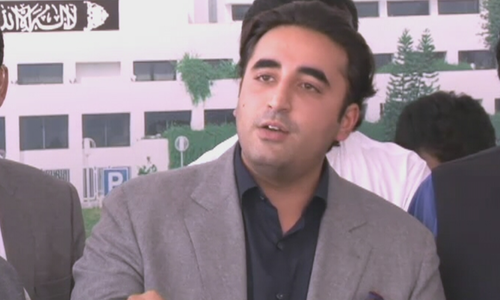
IMF deal a 'complete sell-out': Opposition criticises govt's $6bn bailout package


Opposition parties on Monday lashed out at the Pakistan Tehreek-i-Insaf (PTI) government's agreement with the International Monetary Fund (IMF) about a $6bn bailout to implement an “ambitious structural reform agenda” over a period of 39 months.
The announcement was made by Abdul Hafeez Shaikh, prime minister's adviser on finance, on Sunday night.
Maryam Nawaz, a vice president of the PML-N, called the agreement a "complete sell-out of [the country's] sovereignty" and added that it had been "rejected by the stock market".
In a tweet, Maryam said that the incumbent government had led the country on a "brink of [an] economic disaster" in just nine months.
"IMF or no IMF - the incompetent rulers were not sure. Finally when it does come, it’s a complete sell out of our sovereignty and rightly REJECTED by stock market," she tweeted. "After just 9 months, country is on the brink of [an] economic disaster."
PPP Senator Sherry Rehman also criticised the agreement and demanded the government to brief the Parliament over the conditions of the deal.
"Under what terms and conditions is the government pledging Pakistan and its institutions as a collateral to the IMF?" she asked.
She further questioned the absence of senior officials of the finance ministry from the negotiations and predicted that a "tsunami of inflation" was about to come.
PML-N's secretary general Ahsan Iqbal, in a conversation with Dunya News, warned that the opposition would "give a joint reaction against the government's anti-people policies during the National Assembly's budget session".
He added that the government has "left the people at IMF's mercy".
Iqbal also quoted a tweet regarding the alarming stock market trend, saying: "Naya Pakistan and tabdeeli (change) are on their way! Watch the highlights of the '92 World Cup's final and enjoy."
The Pakistan Stock Exchange (PSX) experienced a bloodbath today with the benchmark KSE-100 Shares Index shedding 937 points — a loss of more than 2.7 per cent — during intra-day trading. Analysts held the tough conditions attached with the IMF bailout package responsible for bearish rule at the bourse.
What has Pakistan agreed to?
As per the agreement, Pakistan would receive $6 billion worth of assistance under the IMF programme over a period of three years.
The Fund had been pushing for structural economic reforms since negotiations started last year which included a market-based exchange rate, introduction of new tax measures to increase revenue etc.
Shaikh, while announcing the details of the agreement yesterday, said that said there were many things desired by the Fund that the government already saw as being in the country's interest; they include aligning expenditure with resources, improve the functioning of loss-making state-owned enterprises, curtail the subsidies available to the wealthy classes and tax the rich segments.
He said because the government wants to send "a signal of financial discipline" and resolve fiscal challenges, the programme would entail raising prices in some areas in order to recover the costs.
A government official told Dawn that in the first year beginning on July 1, Pakistan will have to generate additional tax revenues of about Rs600bn, raise about Rs100bn from higher-end power consumers, privatise at least two power LNG plants worth over Rs280bn ($2b) and stop haemorrhaging of other public sector entities. These three big agenda items would provide about Rs1 trillion fiscal adjustment during the first year, including a one-time recovery of about Rs280bn from sale of two LNG plants in Punjab.
The IMF, in a statement, said that the forthcoming budget for FY2019-20 would be the "first critical step" in the fiscal strategy of the PTI government.
"The budget will aim for a primary deficit of 0.6 per cent of GDP supported by tax policy revenue mobilisation measures to eliminate exemptions, curtail special treatments, and improve tax administration."