0
0
ISLAMABAD: Heat emergency is a new challenge for urban areas and all cities should start preparations to mitigate the impact if there is a severe heat wave, especially in Ramazan.
Speakers at a discussion session titled ‘Preparing communities and hospitals for heat waves – lessons learnt from Karachi’ called upon the authorities concerned as well as private hospitals to prepare for any emergency during the upcoming summer months due to possible heat waves.
The session was organised by Lead Pakistan in collaboration with Aga Khan University (AKU), Johns Hopkins University and Aman Foundation.
The speakers said temperature variations and severity of weather were becoming a regular occurrence due to climate change and Pakistan was a vulnerable country.
Experts, including medical practitioners, also called upon the provincial governments to spread heat-related awareness among the citizens as well as religious circles as a heat wave could arrive in Ramazan.
Senate Standing Committee on Climate Change Chairperson Senator Sitara Ayaz criticised the attitude including that of politicians for ignoring threats of climate change.
“The threats are there such as severe heat, faster melting of glaciers, unexpected heavy rainfall that cause flooding and even damage to agriculture sector,” she said.
Ms Ayaz said the whole region was facing threats of climate change and there was a need for cooperation between India, Pakistan and other counties of South Asia.
“But the condition is the same internally as we, parliamentarians, are busy all the time in petty politics, ignoring the greater threat to the citizens.”
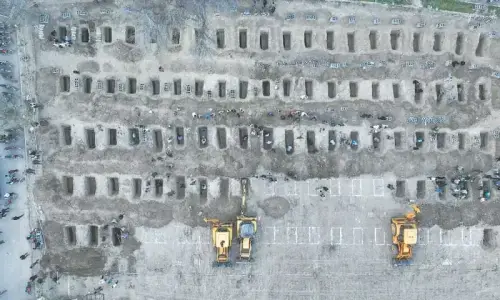
Other speakers said 1,200 people died due to a heat wave in Karachi in 2015 and several other cities, including Sibi, Larkana, Lahore and Hyderabad, were equally vulnerable due to urbanisation.
Dr Junaid Razzak, professor of emergency medicine at Johns Hopkins University, said the mercury level was 5-7 degrees Centigrade higher in downtown during summers compared to suburbs.
“Besides, traffic signals are always 1-2 degrees higher than the temperature of the city. People walking in that area or on motorcycles are vulnerable to heat waves.”
He said the most vulnerable class included people at lower segment of social economic class, elderly, those suffering from diabetes, heart problems and asthma and they have to be extra careful in summers.
Dr Nadeemullah Khan, associate professor at AKU, said hospitals should not only prepare themselves in advance but their managements should also keep an eye on weather predictions too.
Zaheer Chand of Aman Foundation called for heat preparedness at the community level.
Published in Dawn, April 20th, 2019