Uber wins $1bn investment from Toyota, SoftBank fund


 1
1


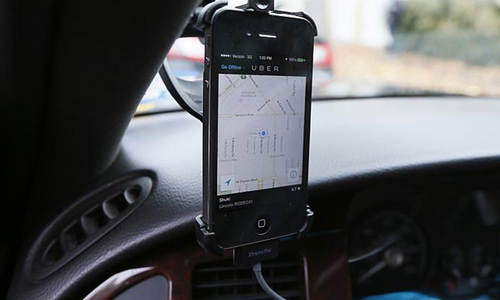
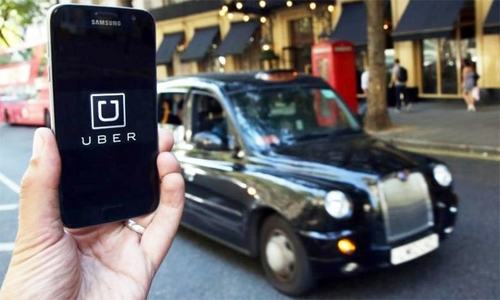
Japanese car giant Toyota and investment fund SoftBank Vision Fund on Friday unveiled an investment of $1 billion in US company Uber to drive forward the development of driverless ridesharing services.
The latest cash injection, expected to close in the third quarter this year, came amid fevered anticipation of Uber's public share offering which is expected to be the largest in the tech sector for years.
Toyota has already invested $500 million in Uber as the firm races Google-owned Waymo and a host of other companies, including major automakers, to develop self-driving vehicles.
The latest investment, which also involves Japanese parts maker DENSO, will go to Uber's Advanced Technologies Group in a bid to “accelerate the development and commercialisation of automated ridesharing”, the firms said in a statement.
Toyota and DENSO are stumping up $667m and SoftBank Vision Fund, the investment arm of Japanese tycoon Masayoshi Son's SoftBank, will pour $333m into the venture. It is already the top shareholder in Uber, holding 16 per cent.
The Japanese car firm said it would also contribute “an additional $300m over the next three years to help cover the costs related to these activities”.
Uber chief executive Dara Khosrowshahi said driverless cars would “transform transportation as we know it, making our streets safer and our cities more liveable”. His firm is aiming to go beyond car rides to becoming the “Amazon of transportation” in a future where people share, instead of own, vehicles.
If all goes to plan, commuters could ride an e-scooter to a transit station, take a train, then grab an e-bike, share a ride or take an e-scooter at the arriving station to complete a journey — all using an Uber app on a smartphone.
Uber is also seeing growing success with an “Eats” service that lets drivers make money delivering meals ordered from restaurants.
'Sharing economy'
Last week, Uber filed official documents for its much-anticipated public share offering.
The filing with the Securities and Exchange Commission said it operates on six continents with some 14m trips per day and has totalled more than 10b rides since it was founded in 2010.
The filing contained a “placeholder” amount of $1b to be raised but that figure is expected to increase ahead of the initial public offering (IPO) expected in May.
The Wall Street Journal said earlier this month that Uber was seeking to raise $10b in what would be the largest stock offering of the year.
Media reports said the ride-hailing giant was likely to seek a market value of close to $100b. Uber is the largest of the “unicorns” or venture-backed firms worth at least $1b to list on Wall Street, and is one of the key companies in the “sharing economy” based on offering services to replace ownership of cars, homes and other commodities.
Its revenue grew 42pc last year to $11.2b but it continued to lose money from its operations. A net profit was reported for the year from a large asset sale, but operational losses were more than $3b.
And some analysts have voiced caution over the forthcoming IPO given a relative lacklustre debut for Lyft, the main US rival.
Khosrowshahi has promised greater transparency as he seeks to restore confidence in the global ridesharing leader hit by a wave of misconduct scandals.
In October, Toyota and SoftBank announced the creation of a joint venture to create “new mobility service” including driverless vehicles for services such as meal deliveries.
The new company — called “Monet”, short for “mobility network” — is majority owned by SoftBank.
SoftBank started as a software firm but has increasingly been pushing into investments under tycoon Son, one of Japan's richest men.