2
2

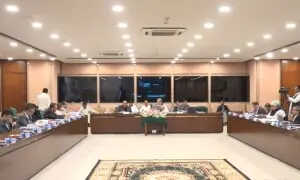
ON Tuesday, the federal ombudsperson decried the delays in implementing reforms in prisons across Punjab in a meeting held in the capital. It was last September that the ombudsperson had asked the provincial governments to submit recommendations for jail reforms, in light of the Supreme Court’s orders, which called for the formation of provincial district oversight committees for monitoring purposes, along with committees to look after the welfare of prisoners, particularly women, children and the poor. But this has not been the case so far, as the ombudsperson further complained that the district oversight committees were not allowed to visit jails for inspection. It is no secret that Pakistan’s prisons are vastly overcrowded, beyond their original capacity, with outdated infrastructure. On Dec 17, 2015, the UN adopted the Standard Minimum Rules for the Treatment of Prisoners, also known as the Mandela Rules — named after the South African president who spent 27 years of his life in prison — which recommends humane treatment towards prisoners, and advocates for their rehabilitation through alternatives to incarceration. Pakistan must look towards alternatives as well, as our prisons are packed beyond capacity.
In May 2018, for instance, there were a total of 83,718 prisoners languishing in various jails across Pakistan — and 51,535 of those were in Punjab alone. The vast majority of these prisoners are not even convicts, they are either in the process of trials or their trials have not even begun. Hardened criminals are lumped together with first-time or petty offenders. Furthermore, the lives of prisoners are governed by archaic, colonial-era laws that are reactionary or punitive in nature, as opposed to being reformative, and end up doing more damage than good. Medicine and emergency services are not available to them, and the standards and hygiene of food are poor. There is also evidence of torture and discriminatory practices by superintendents towards the prisoners. Since they are viewed as the ‘rejects’ and ‘anti-social’ elements that ‘contaminate’ society, there is a view that they ‘deserve’ misery and punishment, and little attention is paid to their suffering, psychological and physical health. And so prisons end up being cesspools of disease and crime away from the glare of the rest of society. But nobody is born a criminal, and both state and society must reflect on their own roles in the creation of criminals.
Published in Dawn, March 14th, 2019