Mullah Omar never visited Pakistan after 9/11 — let alone die there, new biography claims



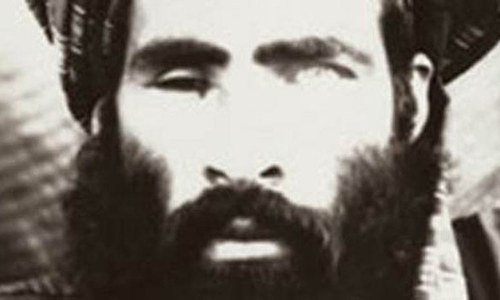
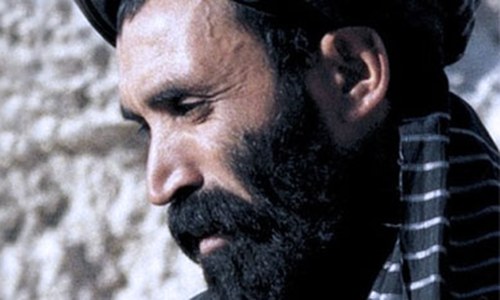
A new biography by a Dutch journalist claims that the United States and its allied government in Kabul were incorrect when they said that Taliban founder Mullah Omar had died in Pakistan, as the renowned Taliban leader never visited Pakistan after 2001.
Writer Bette Dam says in her Dutch-language book Searching for the Enemy that Omar — whose personality and presence always remained shrouded in mystery, particularly after the United States' invasion in Afghanistan — lived within walking distance of US bases in Afghanistan for years.
A summary of some of the book's findings have been published in English by the newly-launched Zomia think tank under the title Secret Life of Mullah Omar.
'A virtual hermit'
According to the author, she got her information from Jabbar Omari — Mullah Omar’s bodyguard from the moment he vanished in Kandahar until his death in 2013.
Dam says that she triangulated his interviews with Omari through sources with knowledge of Mullah Omar’s whereabouts to piece together his life after the 9/11 attacks.
The book reveals the Taliban chief lived as a virtual hermit, refusing visits from his family and filling notebooks with jottings in an imaginary language.
The new book highlights embarrassing failures of American intelligence and makes it clear that contrary to US claims, Mullah Omar appeared more as a spiritual leader among the Taliban ranks after the US invasion and didn't lead armed activities against US forces.
In the introduction published in English, Dam says, "As I show in my book, during the US-and-Pakistan-backed 'jihad' against the Soviet occupation, Mullah Omar went only twice to Pakistan: once to a Quetta hospital to treat his wounded eye, and the other time also to Quetta, to collect weapons after an internal conflict in his mujahideen group."
Omar never lived in Pakistan
According to the book, Mullah Omar never lived in Pakistan. Instead, he spent the remainder of his life in two small villages in the remote, mountainous province of Zabul.
The book says Omar used to listen to the BBC's Pashto-language news broadcasts in the evenings, but rarely commented on developments in the outside world.
He maintained his reticence even when he learned about the death of al-Qaeda supremo Osama bin Laden.
Almost caught twice
Following the 9/11 attacks in 2001 which led to the fall of the Taliban, the US put a $10 million bounty on Omar and he went into hiding in a small compound in the regional capital Qalat, Dam writes.
The family living at the compound were not told of the identity of their mystery guest, but US forces almost found him twice. At one point, a US patrol approached as Omar and Omari were in the courtyard. Alarmed, the two men ducked behind a pile of wood, but the soldiers passed without entering the premises. A second time, US troops even searched the house but did not uncover the concealed entrance to his secret room. It was not clear if the search was the result of a routine patrol or followed a tip-off.
Omar decided to move when the US started building Forward Operating Base Lagman in 2004, just a few hundred metres from his hideout.
He later moved to a second building. Soon afterwards, the Pentagon constructed the Forward Operating Base Wolverine close by. This base became home to 1,000 US troops, with American and British special forces sometimes based there.
Despite his fear of being caught, Omar did not move again. He rarely went outside and often hid in tunnels when US planes flew over.
According to Dam, Omar would often only talk to his guard and cook, and used an old Nokia mobile phone, without a sim card, to record himself reciting verses from the Holy Quran.
Omar's Taliban ruled Afghanistan from 1996 until 2001, and have waged an insurgency in the country since then.
Omar, who delegated effective Taliban leadership after 2001, appears to have acted as more of a spiritual leader, and the militant movement kept the news of his death in 2013 secret for two years.